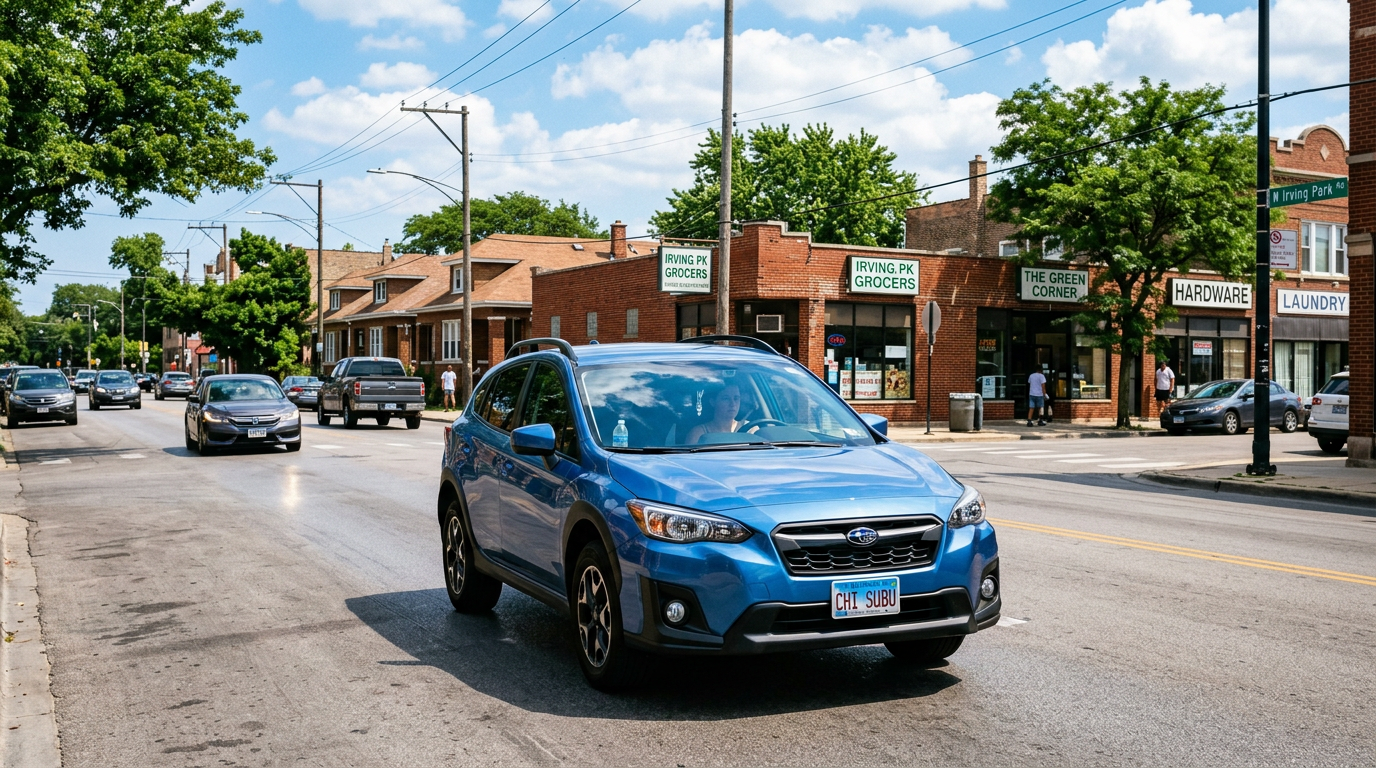
Summertime in the Midwest brings a heavy, humid heat that puts immense thermal stress on your vehicle's cooling systems. When temperatures climb during a July afternoon, the cabin of a parked car can quickly turn into a greenhouse, radiating intense heat from the dashboard and seating surfaces. For drivers navigating the daily stop-and-go commute along Irving Park Road, a fully optimized air conditioning system is a critical safety necessity. The automotive heating, ventilation, and air conditioning (HVAC) system is a highly pressurized network of aluminum lines, rubber hoses, expansion valves, and electrical sensors. If any single component in this sealed environment experiences a drop in performance, your cabin comfort will rapidly deteriorate.
At Berman Subaru of Chicago, our factory-trained technicians specialize in maintaining the specialized climate systems of your vehicle. Keeping your vehicle cool during seasonal temperature spikes requires proactive maintenance of both the cabin ventilation components and the engine's cooling system. Our service team is fully equipped with advanced diagnostic tools to inspect, service, and repair your air conditioning loop before the worst of the summer humidity arrives.
If you notice your vents are struggling to lower the cabin temperature, or if you want to ensure your vehicle is fully prepared for seasonal driving, you can easily find our service center location on the northwest side. You can also reach our service advisors directly by giving us a quick call to discuss any cooling performance issues you might be experiencing.
Table of Contents
- Understanding Subaru Climate Control Tech and Cabin Air Filter Care
- Why Your Subaru Air Conditioner Blows Warm Air and How to Fix It
- Subaru Outback vs Honda CR-V Cooling Performance and Condenser Maintenance
- Common Questions About Subaru Air Conditioning and Summer Maintenance
Understanding Subaru Climate Control Tech and Cabin Air Filter Care
Subaru vehicles utilize advanced climate technologies designed to maximize passenger comfort while maintaining excellent fuel efficiency. A key feature found in modern models like the 2026 Subaru Forester is the dual-zone automatic climate control system, which is standard on almost all trim levels above the base configuration. This electronic system uses solar radiation sensors, ambient temperature sensors, and cabin humidity sensors to automatically adjust fan speeds, air distribution, and temperature mixing. By calculating these variables in real time, the system maintains independent, stable temperature zones for both the driver and front passenger without requiring constant manual adjustments.
To keep this advanced system operating at peak efficiency, regular maintenance of the cabin air filter is absolutely essential. This filter prevents road dust, pollen, soot, and industrial debris from entering the HVAC housing and clogging the delicate fins of the interior evaporator core. Over time, a clogged filter restricts the volume of air the blower motor can push into the cabin, making it feel as though the air conditioning system has lost its cooling power when the system is actually just choked for airflow.
Checking and replacing the cabin air filter on a 2026 Subaru Forester is a straightforward maintenance task:
- Open the passenger-side glove box completely and empty its contents.
- Locate the dampener arm on the outer right side of the glove box and gently squeeze the retaining tab to release it.
- Press inward on both sides of the glove box bin to release the stop tabs, allowing the entire glove box assembly to swing downward on its bottom hinges.
- Locate the rectangular filter cover behind the glove box opening, pinch the plastic tabs on the sides of the cover, and pull the tray straight out.
- Slide the old filter out of the tray, insert a fresh replacement while ensuring the airflow direction arrows point downward, and snap the cover back into place before reassembling the glove box.
If you prefer to have a professional handle this maintenance or perform a complete multi-point inspection of your HVAC system, you can schedule your service online with our certified technicians. To purchase a replacement filter directly for a DIY installation, you can order genuine Subaru parts through our dedicated parts department.
Why Your Subaru Air Conditioner Blows Warm Air and How to Fix It
When an air conditioning system begins blowing warm or lukewarm air, it is typically a sign that the pressurized refrigerant loop has lost its physical integrity or an electrical control component has failed. A common misconception is that automotive refrigerant is a consumable fluid that simply wears out over time. In reality, the air conditioning loop is a completely sealed system. If the refrigerant level is low, it is because a physical leak has developed. These leaks often occur at rubber hose crimps, dried-out rubber O-rings, or within the aluminum condenser assembly due to road debris impacts or corrosion from winter road salt.
Another primary cause of warm air is a malfunctioning A/C compressor or its electromagnetic clutch. The compressor acts as the heart of the system, pumping and compressing low-pressure gas into a high-pressure, high-temperature state to facilitate the heat transfer process. If the compressor clutch fails to engage, the pulley will spin freely on the serpentine belt without actually driving the internal pistons of the compressor. This can be caused by a failed clutch coil, a blown electrical fuse, or a faulty system relay in the engine bay fuse box. Additionally, modern vehicles utilize high-pressure and low-pressure safety switches; if these sensors detect that refrigerant pressure is too low or dangerously high, they will prevent the compressor from turning on to protect the mechanical components from catastrophic damage.
To pinpoint these issues accurately, our technicians use specialized diagnostic equipment rather than relying on retail recharge cans, which often contain harmful chemical sealants that can clog expansion valves and ruin internal components. We utilize ultraviolet dye injection and electronic refrigerant sniffers to locate microscopic leaks without unnecessary disassembly. Before booking your diagnostic appointment, be sure to check our current service specials for current pricing on air conditioning diagnostics, system recharges, and cooling system maintenance.
Subaru Outback vs Honda CR-V Cooling Performance and Condenser Maintenance
When comparing the cabin cooling capabilities of the 2026 Subaru Outback against competitors like the Honda CR-V, the difference in real-world performance often comes down to cabin insulation and glass technology. The 2026 Subaru Outback features standard solar-reducing glass and acoustic windshields on its mid-to-high trims, which work to reject a higher percentage of solar infrared heat before it can penetrate the cabin. This thermal barrier reduces the initial heat load on the passenger cabin, allowing the air conditioning system to stabilize the interior temperature much faster after the vehicle has been parked in direct sunlight.
To maintain this cooling performance, the front-mounted condenser must remain clean and free of physical obstructions. The condenser is located directly behind the front grille, ahead of the radiator, where it receives direct airflow to dissipate heat from the hot refrigerant gas. Because of this exposed position, it is highly susceptible to collecting bugs, leaves, road grime, and winter salt residue, all of which act as an insulating blanket that blocks heat transfer.
Cleaning the condenser requires a gentle touch to avoid bending the delicate aluminum fins:
- Ensure the engine is completely off and cool to the touch.
- Visually inspect the front grille area of your vehicle for large debris like leaves, paper, or plastic bags, and carefully remove them by hand.
- Using a standard garden hose equipped with a gentle spray nozzle, spray water directly through the front grille mesh from a distance of about twelve inches.
- Direct the water spray straight through the fins to wash away accumulated dirt, salt, and bugs, taking care not to use a high-pressure washer, which can permanently flatten the soft aluminum fins and permanently restrict airflow.
- Allow the area to air dry completely before starting the engine and running the air conditioning system.
Maintaining these front-end components ensures your vehicle's cooling system operates at maximum efficiency. If you are considering upgrading to a model equipped with the latest cabin comfort technologies, you can explore our new vehicle inventory to see our latest offers on highly capable models like the 2026 Subaru Outback or the compact 2026 Subaru Crosstrek.
Common Questions About Subaru Air Conditioning and Summer Maintenance
Q: What is Subaru's Remote Engine Start with Climate Control?
A: This technology allows you to start your vehicle's engine remotely and pre-set the interior temperature using the MySubaru app on your mobile device. The system can automatically activate the air conditioning, adjust fan speeds, and even turn on ventilated seats depending on the current weather conditions. This feature is available on equipped models featuring keyless access with push-button start and automatic climate control, but it is not compatible with manual-transmission models or base trims using a standard key ignition.
Q: How much heat reduction does ceramic window tint offer compared to standard tint?
A: Ceramic window tint utilizes advanced ceramic nanoparticles to reject up to 50% to 65% of total solar energy, specifically targeting infrared heat rays. In contrast, standard dyed or basic metallic window tints typically only reject between 20% and 30% of solar heat. Applying ceramic tint to your vehicle's side and rear windows significantly reduces the workload on your air conditioning system, helping to maintain a stable cabin temperature while protecting interior surfaces from UV damage.
Q: Does the 2026 Subaru Forester have rear seat air vents?
A: Yes, rear seat air vents are standard on the 2026 Subaru Forester Premium trim and all higher trim levels. These vents are located on the rear of the center console assembly, delivering direct airflow to second-row passengers. This feature helps distribute conditioned air evenly throughout the cabin, ensuring that passengers in the back cool down just as quickly as those in the front seats during hot summer drives.
Q: What should I do first if my Subaru's A/C suddenly stops working?
A: If your air conditioning system stops blowing cold air, the first step is to turn off the A/C button to prevent potential damage to the compressor clutch or belt. Next, perform a quick visual check of your dashboard for any warning lights, and inspect the cabin air filter to ensure it is not completely blocked. If the filter is clean and the system still blows warm air, avoid using retail aerosol recharge kits and schedule a professional diagnostic appointment to identify the root cause.
If you are experiencing any cooling issues or need assistance with your vehicle's climate control system, please visit our service center at 4330 W Irving Park Rd, Chicago, IL 60641. For directions or to speak directly with a service advisor, you can find our location details online or contact our service department directly by calling (708) 943-9726.
© 2026 Berman Subaru of Chicago. All rights reserved.