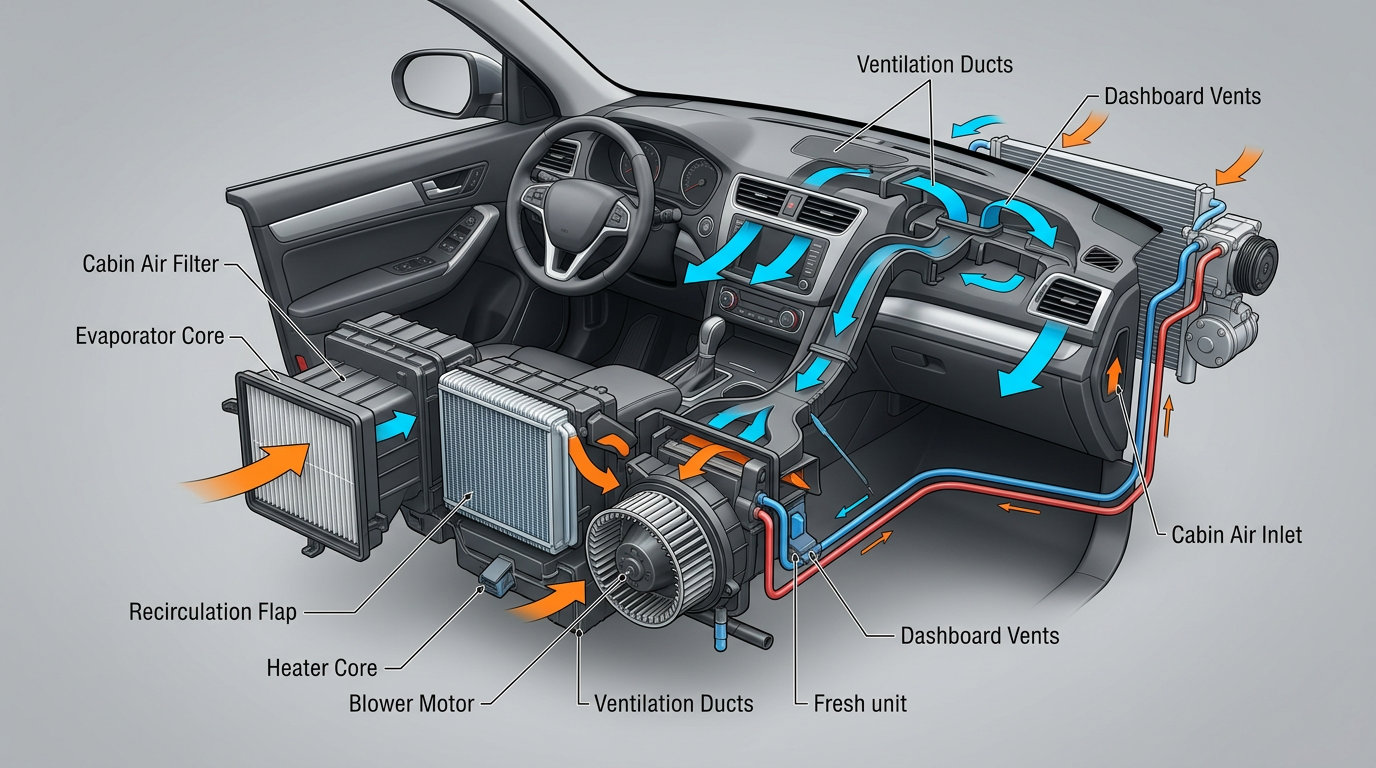
When summer temperatures rise, a fully functioning automotive climate control system becomes an absolute necessity for daily travel. Modern Subaru crossovers rely on a complex network of pressurized lines, heat exchangers, and electronic actuators to keep the cabin comfortable. Recognizing the early symptoms of system degradation can prevent minor refrigerant leaks from escalating into costly compressor failures.
The most frequent indicator of a struggling system is a noticeable drop in cooling performance. If your vents are discharging lukewarm air even after several minutes of driving, the system is likely suffering from a low refrigerant charge or a failing compressor clutch. Another common warning sign is restricted airflow. When you turn the blower motor to its highest setting and only receive a faint breeze, a blockage or a severely saturated filter is usually the culprit.
Physical sounds and smells also provide immediate clues about the health of your HVAC components. A worn compressor pulley bearing typically produces a loud squealing, grinding, or rattling noise when you press the A/C button. Meanwhile, a musty or vinegar-like odor wafting through the cabin points to microbial growth on the evaporator core, often caused by a clogged condensate drain tube.
Addressing these warning signs early helps protect the internal components of your vehicle from permanent damage. If you notice any of these symptoms while navigating your daily route along Irving Park Road, our team is ready to assist. You can easily find our service center by getting directions to our Irving Park facility, or you can speak directly with an advisor by giving us a quick call at (708) 943-9726 to discuss your vehicle's performance.
Table of Contents
- How Dual Zone Climate Control Manages Temperature in Modern Subaru Models
- When to Use Max AC Versus Recirculate Modes for Quick Cabin Cooling
- Replacing the Cabin Air Filter to Restore Airflow and Prevent Musty Odors
- Understanding Warranty Coverage and Maintenance Plans for Refrigerant Recharges
- Why Professional Subaru Service Outperforms General Independent Repair Shops
- Common Questions About Servicing Your Subaru Air Conditioning System
How Dual Zone Climate Control Manages Temperature in Modern Subaru Models
Have you ever wondered how your passenger side can blow cool air while the driver side stays warm? Modern Subaru models, such as the 2026 Subaru Outback and the 2026 Subaru Forester, utilize an advanced dual-zone climate control system designed to maximize individual passenger comfort. This system relies on a central climate processor, independent electronic blend doors, and dedicated cabin temperature sensors to manage distinct microclimates simultaneously.
The system operates by constantly monitoring the cabin environment through solar radiation sensors on the dashboard and temperature sensors inside the ductwork. When the driver and passenger set different target temperatures, the central computer commands precise electric stepper motors to adjust the blend doors. These doors regulate the exact ratio of cooled air from the evaporator core and heated air from the heater core before distributing it to the respective vents.
In larger family vehicles like the three-row 2026 Subaru Ascent, this technology extends to multi-zone configurations, managing airflow to rear-seat passengers to ensure consistent cooling throughout the entire cabin. Keeping these intricate electronic actuators calibrated is a key part of our seasonal checkups. Keeping your climate control operating perfectly makes every trip more relaxing, and you can learn about our latest maintenance opportunities by viewing our current new vehicle service specials.
When to Use Max AC Versus Recirculate Modes for Quick Cabin Cooling
A common point of confusion for many drivers is deciding when to utilize the "Max A/C" button versus the standard "Recirculate" setting. Understanding how these modes manipulate cabin airflow can drastically reduce the time it takes to cool down your vehicle on a hot summer afternoon.
When you first enter a vehicle that has been parked in the sun, the interior air temperature can easily exceed 120 degrees. In this scenario, you should initially roll down your windows, set the system to "Fresh Air" mode, and turn the blower to high. This configuration forces the superheated air out of the cabin and replaces it with outside air.
Once the initial heat pocket has escaped, close the windows and activate the "Recirculate" or "Max A/C" setting.
- Max A/C Mode: Automatically configures the system to maximum blower speed, lowest temperature, and recirculated air to achieve the fastest possible temperature drop.
- Recirculate Mode: Pulls air from inside the cabin rather than drawing in hot, humid air from the outside. Because the system is re-cooling air that has already passed over the evaporator, it operates with much higher efficiency and places less mechanical strain on the engine.
Once the cabin reaches a comfortable temperature, switching back to "Fresh Air" mode is recommended for longer drives. This helps regulate cabin humidity levels and prevents the windows from fogging on humid days.
Replacing the Cabin Air Filter to Restore Airflow and Prevent Musty Odors
The cabin air filter is the primary barrier protecting your vehicle's interior from dust, pollen, soot, and road debris. Over miles of driving, this pleated paper or charcoal element inevitably becomes saturated, restricting the volume of air that can pass through your HVAC vents.
Subaru recommends replacing the cabin air filter every 12 months or 12,000 miles. However, if your daily commute involves heavy stop-and-go city traffic in Chicago, you may need to replace this filter more frequently. A severely clogged filter restricts airflow, forcing your blower motor to work harder and run hotter, which can lead to premature motor failure.
In addition to restricting airflow, a dirty filter acts as a sponge for moisture. When humidity levels rise, this trapped moisture creates an ideal breeding ground for mold and mildew. This is the primary source of the musty, vinegar-like odor that many drivers notice immediately after turning on their air conditioning. Replacing this inexpensive filter is a quick, straightforward procedure that instantly restores vent velocity and ensures the air you breathe remains clean and odor-free.
Understanding Warranty Coverage and Maintenance Plans for Refrigerant Recharges
A frequent question we receive at our service counter is whether an air conditioning system recharge is covered under standard vehicle maintenance programs. Routine maintenance plans generally focus on consumable items like engine oil, tire rotations, and inspections, meaning that standard wear-and-tear refrigerant recharges are typically not covered.
However, an air conditioning system is a sealed environment. Under normal operating conditions, a Subaru should not require regular refrigerant top-offs. If your system is low on refrigerant, it is almost always the result of a physical leak in a line, fitting, condenser, or evaporator.
If your vehicle is still within its factory bumper-to-bumper warranty window, and our technicians identify a component defect—such as a cracked line or a leaking seal—the repair and the subsequent refrigerant recharge are typically covered under the manufacturer's warranty. To keep your system operating at peak performance and catch potential issues before your warranty expires, we recommend having your system pressure-tested annually. You can secure an inspection time slot online by using our portal to schedule your service appointment with our factory-trained team.
Why Professional Subaru Service Outperforms General Independent Repair Shops
While general automotive repair shops are capable of handling basic maintenance, modern Subaru air conditioning systems require specialized equipment and brand-specific technical expertise. Newer models use advanced, environmentally conscious R-1234yf refrigerant, which requires dedicated recovery and recharging machines that many general shops do not possess.
Our factory-certified technicians understand the exact oil and refrigerant capacities for every model, from the compact 2026 Subaru Forester to the spacious 2026 Subaru Ascent. Over-filling or under-filling a system by even an ounce can severely degrade cooling performance or cause the compressor to lock up entirely. Furthermore, our team uses specialized diagnostic tools to interface directly with your vehicle's climate control module, allowing us to read proprietary fault codes and test individual electronic blend door actuators.
We also use exact-fit components designed specifically for your vehicle's layout. If your system requires a replacement hose, seal, or compressor, you can easily order genuine Subaru parts directly through our department. To make your seasonal maintenance even more affordable, we invite you to browse our current service specials before booking your visit.
Common Questions About Servicing Your Subaru Air Conditioning System
Q: Why is my Subaru A/C blowing warm air only when the car is idling?
A: This symptom is typically caused by a failing radiator fan or a partially blocked condenser. When the vehicle is moving, airflow naturally passes through the condenser to cool the high-pressure refrigerant. At a stop, the system relies entirely on the electric cooling fans to pull air through; if these fans fail, the refrigerant cannot transfer heat, resulting in warm air at idle.
Q: Can I use an over-the-counter A/C recharge kit on my Subaru?
A: We strongly advise against using DIY recharge cans. These kits lack the precision gauges needed to measure actual system pressures, and many contain "leak-stop" additives that can clog the delicate expansion valves and damage expensive professional recovery equipment.
Q: How long does a professional A/C performance test take?
A: A standard diagnostic and pressure test usually takes about an hour. During this time, our technicians measure vent temperatures, test system pressures, check for electronic fault codes, and use specialized UV dye to inspect the lines for any physical leaks.
Q: Does driving with the air conditioning turned on drastically reduce fuel economy?
A: While running the A/C compressor does place a small mechanical load on the engine, modern variable-displacement compressors are highly efficient. At highway speeds, driving with the windows down actually creates more aerodynamic drag—and consumes more fuel—than running the air conditioning with the cabin sealed.
Q: What should I do if I see water dripping onto the passenger floorboard?
A: This is a classic sign of a clogged evaporator drain tube. As the A/C removes moisture from the air, the water drains out of the bottom of the vehicle; if the tube becomes blocked by debris, the water backs up and overflows into the passenger footwell.
If you are experiencing any of these issues while driving through Rogers Park, we can help restore your cabin comfort. Feel free to contact our service advisors at (708) 943-9726, or stop by our location by checking the map and getting directions to our Chicago service center.
© 2026 Berman Subaru of Chicago. All rights reserved.