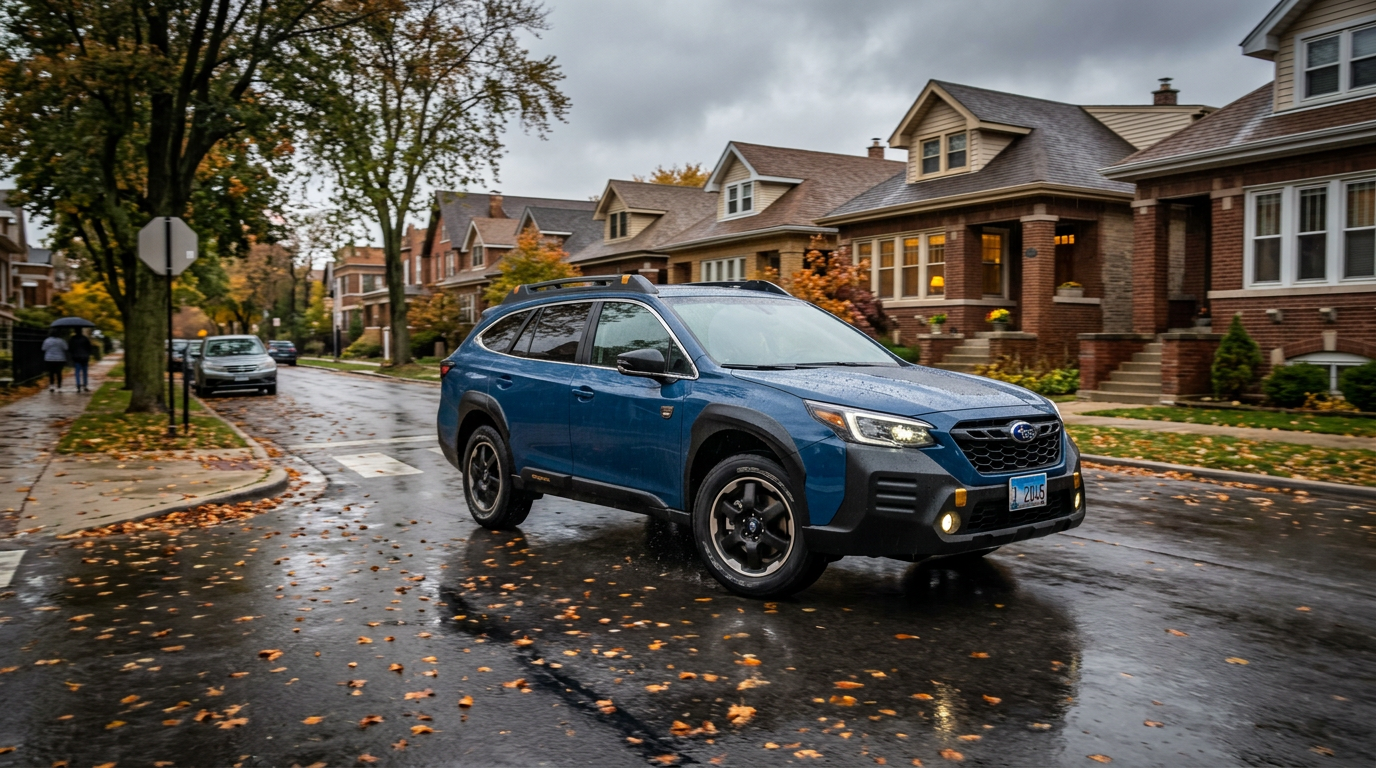
Navigating the bustling streets of Chicago demands a vehicle that responds instantly to sudden stops, pedestrian crossings, and rapid traffic flow changes. While Subaru models are renowned for their safety, the stopping power of your vehicle relies entirely on the health of its braking system. Regular brake inspections are the foundation of preventative maintenance, ensuring that key components like brake pads, calipers, and rotors perform optimally when you need them most. Neglecting these checkups can lead to accelerated wear, compromised stopping distances, and expensive mechanical repairs that could have been easily avoided.
Our team at Berman Subaru of Chicago is dedicated to keeping your vehicle running safely through every season. During a comprehensive inspection, our factory-trained technicians measure pad thickness, check for rotor scoring, and evaluate the hydraulic system for leaks or moisture contamination. For those living or commuting near our service center, finding us is simple; you can easily get directions to our Chicago service department on the northwest side of the city to visit us for your brake needs.
A well-maintained braking system is especially critical for vehicles equipped with advanced safety technologies. Subaru's EyeSight® Driver Assist Technology relies on the physical brakes to execute pre-collision braking commands. If your pads are worn or your brake fluid is degraded, the system cannot slow the vehicle as effectively as designed. To keep your vehicle's safety systems fully integrated and operational, you can quickly schedule your brake service online or give our service advisors a quick call at (708) 943-9726 to discuss any stopping concerns you might be experiencing.
Table of Contents
- Should Drivers Inspect Their Brakes More Frequently?
- What Does a Grinding Noise Mean When I Press the Brakes?
- Understanding the Recommended Brake Maintenance Schedule for a Subaru
- Comparing Aftermarket vs. OEM Subaru Brake Pads and Warranty Impact
- Common Questions About Subaru Brake Care and Self-Inspections
- Schedule Certified Subaru Brake Service at Berman Subaru
Should Drivers Inspect Their Brakes More Frequently?
Heavy stop-and-go traffic on major metropolitan expressways and local arterials places an immense thermal load on vehicle braking systems. The constant friction of slowing down a vehicle in congested urban corridors generates extreme heat, which accelerates the wear of the friction material on your brake pads. For drivers navigating daily commutes through Irving Park, this repetitive braking cycle means that standard manufacturer inspection intervals may not always align with the real-world wear rates experienced on local streets.
Environmental factors also play a major role in how quickly your stopping hardware degrades. Our region experiences severe winter weather, requiring municipal crews to apply heavy amounts of road salt and liquid de-icers. This corrosive mixture easily finds its way into the wheel wells, where it can cause rust buildup on the rotors and bind the caliper slide pins. When caliper pins seize, the brake pads cannot retract fully from the rotor surface, leading to constant dragging, premature pad wear, and warped rotors.
Because of these demanding local conditions, we recommend having your brakes visually inspected every 6,000 miles, which conveniently aligns with your routine tire rotation and oil change intervals. Keeping a close eye on your stopping components helps catch corrosion and uneven wear before they develop into major safety hazards. If you want to keep your vehicle in peak operating condition throughout the year, checking our rotating service specials can help you plan your upcoming seasonal maintenance.
What Does a Grinding Noise Mean When I Press the Brakes?
A harsh, metallic grinding noise when you apply pressure to the pedal is an urgent warning sign that your braking system has suffered severe wear. This distinct sound indicates that the friction material on your brake pads has been completely worn away, leaving the bare metal backing plate to press directly against the metal brake rotor. This metal-on-metal contact causes immediate, destructive damage to the rotors, carving deep grooves into the polished surface and rendering them incapable of safe operation.
When a vehicle reaches this level of wear, simple pad replacement is no longer a viable repair option. The damaged rotors will typically need to be replaced entirely to ensure a smooth, safe surface for the new pads to grip. Drivers might also notice a distinct pulsation in the pedal or a tendency for the vehicle to pull to one side during stops, which points to uneven rotor surface wear or a sticking caliper piston.
Ignoring a grinding noise compromises your safety by drastically increasing your stopping distances. The heavier curb weight of larger family vehicles, such as the three-row 2026 Subaru Ascent with its 4,603 lbs curb weight, means that halting the vehicle puts even greater stress on the stopping hardware. Continuing to drive with metal-on-metal contact can generate enough localized heat to damage wheel bearings, melt caliper seals, or cause complete brake failure. If you hear any metallic scraping or grinding, the vehicle should be inspected by a professional technician immediately.
Understanding the Recommended Brake Maintenance Schedule for a Subaru
Maintaining a consistent service routine is the most effective way to protect your vehicle's longevity and ensure predictable stopping performance. Subaru outlines a structured maintenance schedule designed to monitor and refresh key components before they fail. For standard driving conditions, a professional visual inspection of the brake pads, discs, and lines is recommended every 12,000 miles or 12 months. However, given our severe winter climate and salted roads, more frequent checks are highly beneficial.
The hydraulic fluid that powers your stopping system requires periodic replacement to maintain its integrity. Brake fluid is hygroscopic, meaning it naturally absorbs moisture from the air over time. This moisture contamination lowers the boiling point of the fluid, which can lead to a spongy pedal feel under heavy braking and cause internal corrosion within the steel brake lines and anti-lock braking components. The standard manufacturer guidelines recommend a complete brake fluid flush and replacement every 30,000 miles or 30 months.
A typical professional brake maintenance schedule involves several key milestones:
- Every 6,000 miles: Visual inspection of pad thickness and rotor condition during tire rotations.
- Every 12,000 miles: Detailed inspection of the brake lines, hoses, calipers, and connections.
- Every 30,000 miles: Complete system flush and replacement of the hydraulic fluid.
- As needed (typically 30,000 to 50,000 miles): Replacement of the front and rear brake pads and resurfacing or replacement of the rotors.
Comparing Aftermarket vs. OEM Subaru Brake Pads and Warranty Impact
When the time comes to replace worn stopping components, choosing the right replacement parts is critical for maintaining the original performance of your vehicle. Original Equipment Manufacturer (OEM) parts are engineered specifically for your vehicle's weight, suspension design, and rotor dimensions. For example, the 2026 Subaru Outback utilizes precise rotor sizes, featuring 12.4 inches ventilated front discs and 11.8 inches ventilated rear discs. OEM pads are formulated to match these exact specifications, ensuring optimal heat dissipation, minimal brake dust, and whisper-quiet operation.
While aftermarket brake pads are often marketed as a cheaper alternative, they are typically designed as "one-size-fits-many" solutions. To cut manufacturing costs, aftermarket brands may use harder friction compounds that can cause rapid rotor wear, increased brake squeal, and altered pedal feel. Furthermore, OEM parts are built to integrate seamlessly with the vehicle's electronic systems, such as the electronic brake-force distribution and the brake override system, which automatically reduces engine power if the brake and accelerator pedals are pressed at the same time.
A common question among owners is whether using aftermarket parts will void their vehicle's coverage. Under federal law, installing aftermarket brake pads does not automatically void your Subaru factory warranty. However, if an aftermarket pad fits poorly, runs excessively hot, or causes damage to other components—such as warping the rotors or causing a caliper to seize—any subsequent repairs to those damaged parts will not be covered under the warranty. To ensure exact fitment and preserve your warranty protection, it is always best to order genuine Subaru parts directly through an authorized service center.
Common Questions About Subaru Brake Care and Self-Inspections
Many vehicle owners prefer to take an active role in monitoring their vehicle's health between professional service visits. While complex mechanical repairs should always be left to certified professionals, there are several straightforward checks you can perform at home to stay informed about your vehicle's condition.
Q: Can I check my Subaru's brake fluid level myself?
Yes, you can easily check the fluid level by locating the translucent plastic reservoir under the hood, typically positioned on the driver-side firewall. Without removing the cap—which prevents moisture from entering the system—verify that the fluid level rests between the clearly marked minimum and maximum lines. If the fluid appears exceptionally dark or cloudy, it is time to have the system flushed by a professional.
Q: What does a soft or spongy brake pedal mean?
A spongy or soft pedal feel usually indicates that air has entered the hydraulic lines, or the brake fluid has absorbed an excessive amount of moisture. This condition prevents the hydraulic system from applying full, immediate pressure to the calipers, which can dangerously increase your stopping distance. The system should be bled and flushed by a technician to restore proper pedal pressure.
Q: How can I visually check my brake pads without removing the wheels?
On many models equipped with alloy wheels, you can peer through the spoke openings to view the outer brake pad resting against the rotor. You want to look at the thickness of the friction material bonded to the metal backing plate; if this material looks to be less than one-eighth of an inch thick, your pads are nearing the end of their service life and should be replaced soon.
Q: Why do my brakes squeak first thing in the morning?
An occasional squeak when you first drive the vehicle is often caused by a thin layer of surface rust that forms on the steel rotors overnight, especially in high-humidity areas near Lake Michigan. This surface rust is typically swept away after the first few stops, restoring quiet operation. If the squeaking or squealing is loud and continuous while driving, it means the wear indicators built into the pads are making contact, signaling that replacement is required.
Schedule Certified Subaru Brake Service at Berman Subaru
Maintaining the stopping power of your vehicle is essential for navigating the unpredictable driving conditions of the city. At Berman Subaru of Chicago, our factory-trained technicians utilize specialized diagnostic equipment and genuine OEM parts to keep your vehicle's braking system operating exactly as the engineers intended. Whether you are commuting daily or preparing your vehicle for a weekend trip along the shoreline of Rogers Park, our service center is equipped to handle everything from routine fluid flushes to complete rotor replacements.
We make it easy to stay on top of your vehicle's maintenance needs with convenient scheduling and convenient scheduling. Before booking your appointment, be sure to explore our current service specials for valuable savings on essential maintenance tasks. If you are experiencing a spongy pedal, unusual noises, or reduced stopping power, do not delay your visit. You can easily find our service center located on the northwest side of the city, or contact our service team directly by calling (708) 943-9726 to speak with an advisor today.
© 2026 Berman Subaru of Chicago. All rights reserved.