Subaru Summer Tire Pressure Guide - Berman Subaru of Chicago
Mastering Your Subaru's Summer Tire Pressure in Chicago
As the Chicago summer heat settles over Irving Park Rd and the Kennedy Expressway, your Subaru's performance relies on more than just its famous Symmetrical All-Wheel Drive. One of the most overlooked aspects of summer vehicle maintenance is tire pressure. When the Illinois sun beats down on the pavement, the air inside your tires reacts physically, expanding and potentially pushing your PSI levels beyond the safe operating range. For Subaru owners, maintaining the precise balance of tire pressure is critical because our vehicles are engineered for specific rolling diameters to protect the drivetrain components. At Berman Subaru of Chicago, we understand that navigating the 'City of Broad Shoulders' requires a vehicle that is as resilient as its drivers. Whether you are heading out for a weekend at Montrose Beach or preparing for a long haul across the Midwest, understanding the science of summer tire pressure is the first step in ensuring your safety and your Subaru's longevity. Get Directions to Berman Subaru of Chicago to have our experts verify your settings today. From the Forester to the WRX, every model has a specific 'sweet spot' for inflation that optimizes contact with the road, ensures even wear, and maintains the legendary grip Subaru is known for in any weather condition.
The Science of Heat: Why Summer PSI Matters
Physics dictates that air expands when heated and contracts when cooled. In the world of automotive maintenance, this is most commonly observed through the '1 PSI per 10-degree rule.' For every 10-degree increase in ambient temperature, your tire pressure will typically increase by about one pound per square inch (PSI). While 1 PSI might sound negligible, a typical Chicago summer day can see temperature swings of 30 degrees or more from the cool morning hours to the peak afternoon heat. This means your tires could be running 3-5 PSI higher in the afternoon than they were when you left your garage. This expansion isn't just about the numbers on a gauge; it changes the shape of the tire's footprint. An over-inflated tire rounds out at the center, reducing the amount of rubber that actually touches the road. In a Subaru, where power is constantly being shifted between all four wheels, having a consistent and optimal contact patch is vital for the Symmetrical AWD system to function as designed. If you're noticing a harsher ride or less responsiveness during your commute, it might be time to Call us at (708) 943-9726 to discuss your tire health with our service advisors.
Beyond ambient temperature, the friction of the tire against hot Chicago asphalt generates internal heat. On a 90-degree July day, road surface temperatures can easily exceed 140 degrees. This 'heat soak' significantly stresses the rubber compounds and the air within. If your tires were already near the maximum recommended pressure during a cool morning, the combination of midday heat and highway speeds can push them into a dangerous over-inflation zone. Subaru engineers calibrate the suspension and all-wheel-drive sensors based on specific tire diameters. Significant deviations in pressure can actually cause the vehicle's computers to detect variations in wheel speed, potentially leading to unnecessary wear on the center differential. This is why we emphasize the importance of regular checks during the transition from our damp spring into the height of summer. Staying ahead of these thermal changes ensures that your Subaru remains the precision instrument it was built to be, providing you with the confidence to tackle everything from city traffic to gravel trails.
Optimal PSI for Your Specific Subaru Model
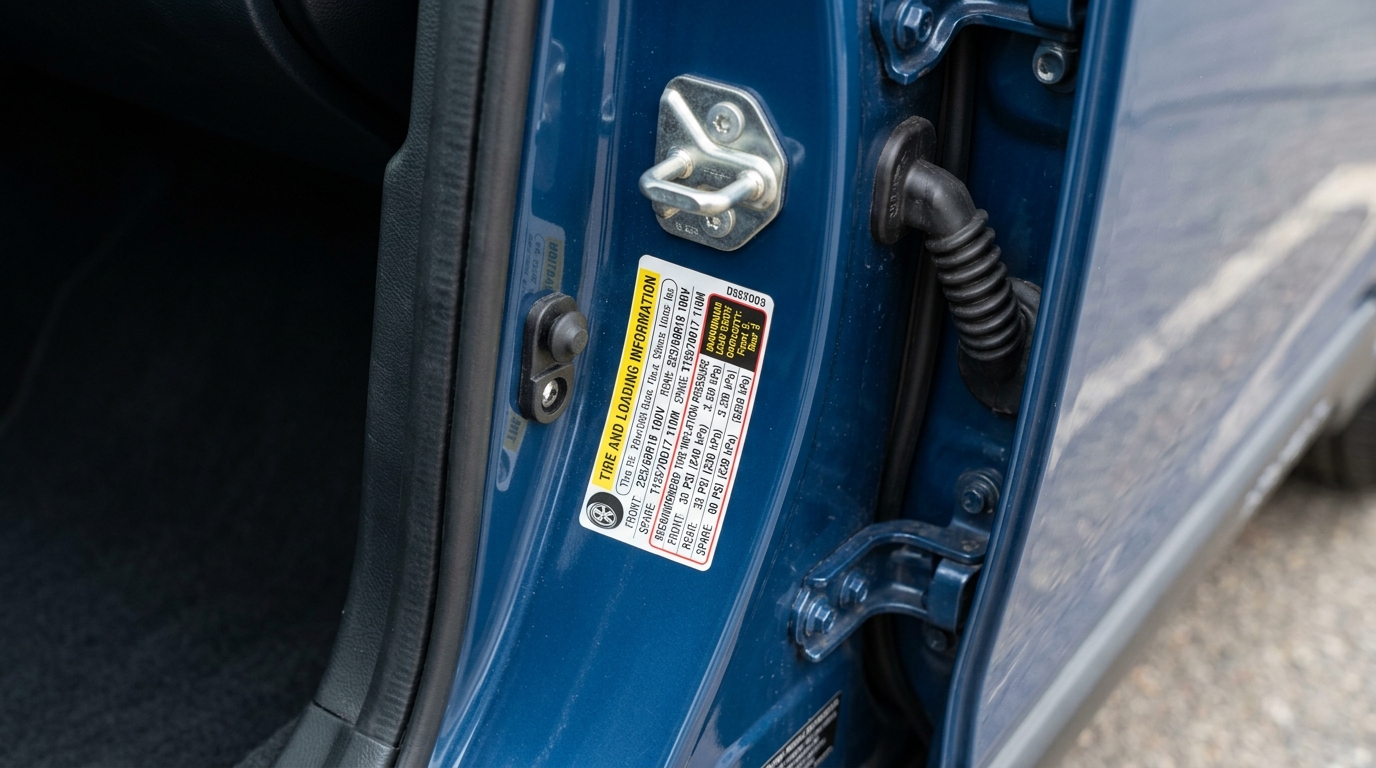
Outback & Forester These adventure-ready SUVs typically require between 32 and 35 PSI. Because they often carry roof racks and camping gear, maintaining the rear tire pressure is especially important for stability when the vehicle is loaded. Always check the driver's side door jamb for your specific VIN's requirements.
Crosstrek & Ascent The nimble Crosstrek usually sits around 33 PSI, while the three-row Ascent, designed for heavy family hauling, may require higher pressures in the rear tires (up to 36-42 PSI depending on load) to compensate for its larger footprint and higher weight capacity.
WRX & BRZ Performance-oriented models like the WRX and BRZ are highly sensitive to pressure changes. Even a 2 PSI difference can alter the turn-in response and cornering balance. Owners of these models should be particularly vigilant during Chicago's summer heat waves.
|
Subaru Model
|
Typical Front PSI
|
Typical Rear PSI
|
|
Outback (2.5i)
|
32-35
|
30-33
|
|
Forester
|
33-35
|
32-33
|
|
Crosstrek
|
33
|
32
|
|
Ascent
|
33-35
|
35-42
|
|
WRX
|
33
|
32
|
The Risks of Over-Inflation in July Heat
When tires are over-inflated due to extreme heat, they become rigid and lose their ability to absorb road imperfections. In a city like Chicago, where 'pothole season' never truly ends, a rigid tire is much more likely to suffer structural damage or cause a blowout when hitting a sharp edge on the road. Furthermore, over-inflation causes the center of the tread to wear out prematurely, shortening the lifespan of your tires and potentially costing you hundreds in early replacements. Beyond wear, safety is the primary concern. An over-inflated tire has a smaller contact patch, which significantly increases your braking distance and reduces traction during those sudden summer thunderstorms that sweep across Lake Michigan. To ensure your tires are in top shape, you can Schedule Your Service Today with our certified technicians.
We also recommend that you Value your trade if you find that your current vehicle is requiring more maintenance than it's worth. Sometimes, upgrading to a newer Subaru with advanced TPMS sensors and modern safety features is the most cost-effective path forward.
Fuel Efficiency and Your Subaru's Footprint
Proper tire pressure is a crucial factor in your Subaru's fuel economy. Under-inflated tires create more rolling resistance, meaning your engine has to work harder and consume more fuel to maintain speed. Conversely, while over-inflation might slightly reduce rolling resistance, it compromises safety and tire wear, as discussed earlier. The goal is to hit the manufacturer's specified PSI exactly to achieve the perfect balance of efficiency and safety. During summer road trips, where you might be driving hundreds of miles at highway speeds, even a 2-3 PSI discrepancy can lead to a noticeable drop in MPG. For a vehicle like the Subaru Crosstrek or Forester, maintaining proper inflation ensures you get the maximum range out of every tank of gas. If you're looking for a vehicle with even better efficiency, feel free to New Vehicles Inventory to see our latest fuel-sipping models.
The 'Cold Pressure' Rule for Summer Mornings
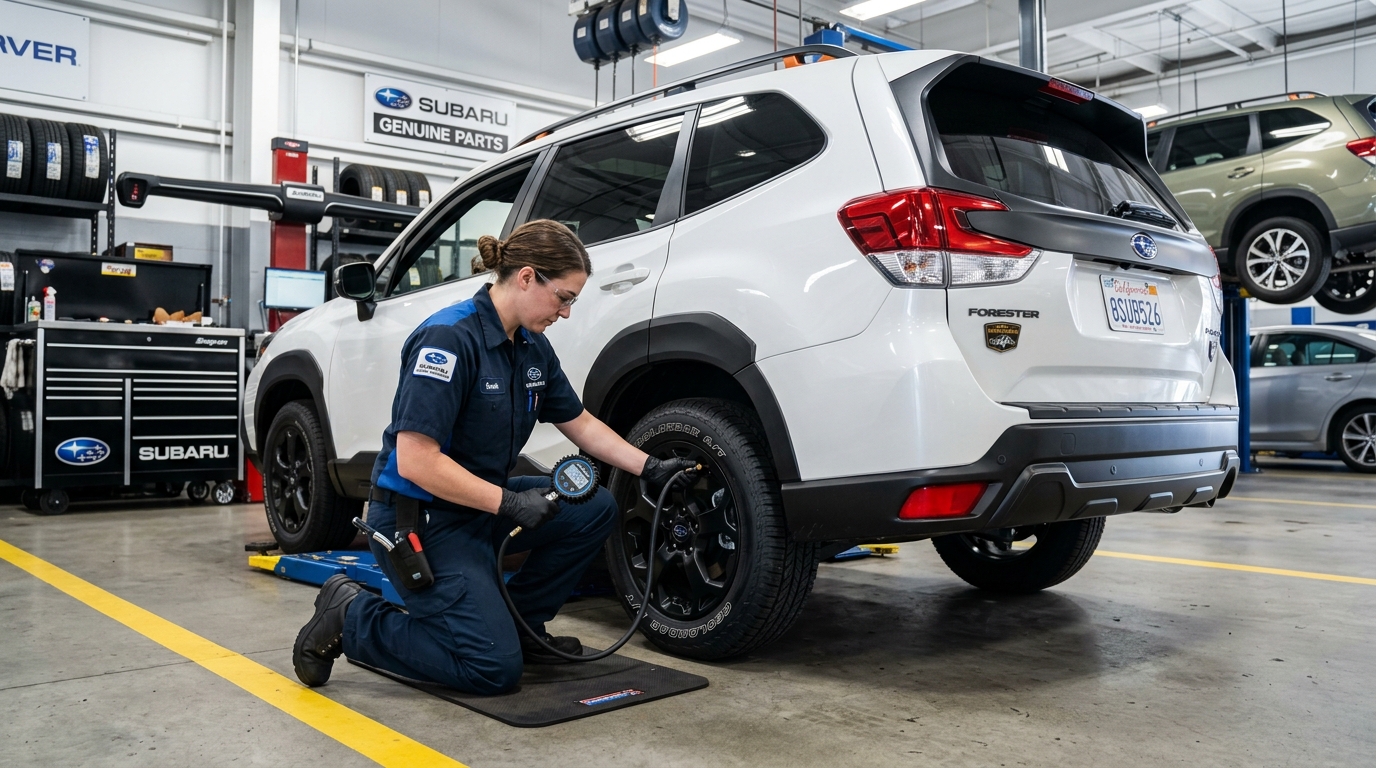
The most important rule in tire maintenance is to always check your pressure when the tires are 'cold.' In this context, 'cold' doesn't mean winter temperatures; it means the tires have not been driven on for at least three hours or have been driven less than one mile. In the summer, the best time to check is early in the morning before the sun has had a chance to bake the tires and before you start your morning commute. If you check your tires after driving just a few miles, the friction and road heat will have already increased the pressure, giving you a 'false' high reading. If you bleed air out to match the placard pressure while the tires are hot, you will likely end up with under-inflated tires once they cool down. This is a common mistake that can lead to poor handling and decreased fuel economy.
If you are at a gas station and have already been driving, keep in mind that your tires are likely 3-5 PSI higher than their cold state. It is always better to wait until you can check them properly at home or visit us at Berman Subaru of Chicago. We provide professional pressure checks using calibrated gauges to ensure absolute accuracy. Looking for more ways to save this summer? Check out our Service Specials for deals on tire rotations, alignments, and multi-point inspections that keep your Subaru running perfectly.
TPMS: Understanding the Warning Light
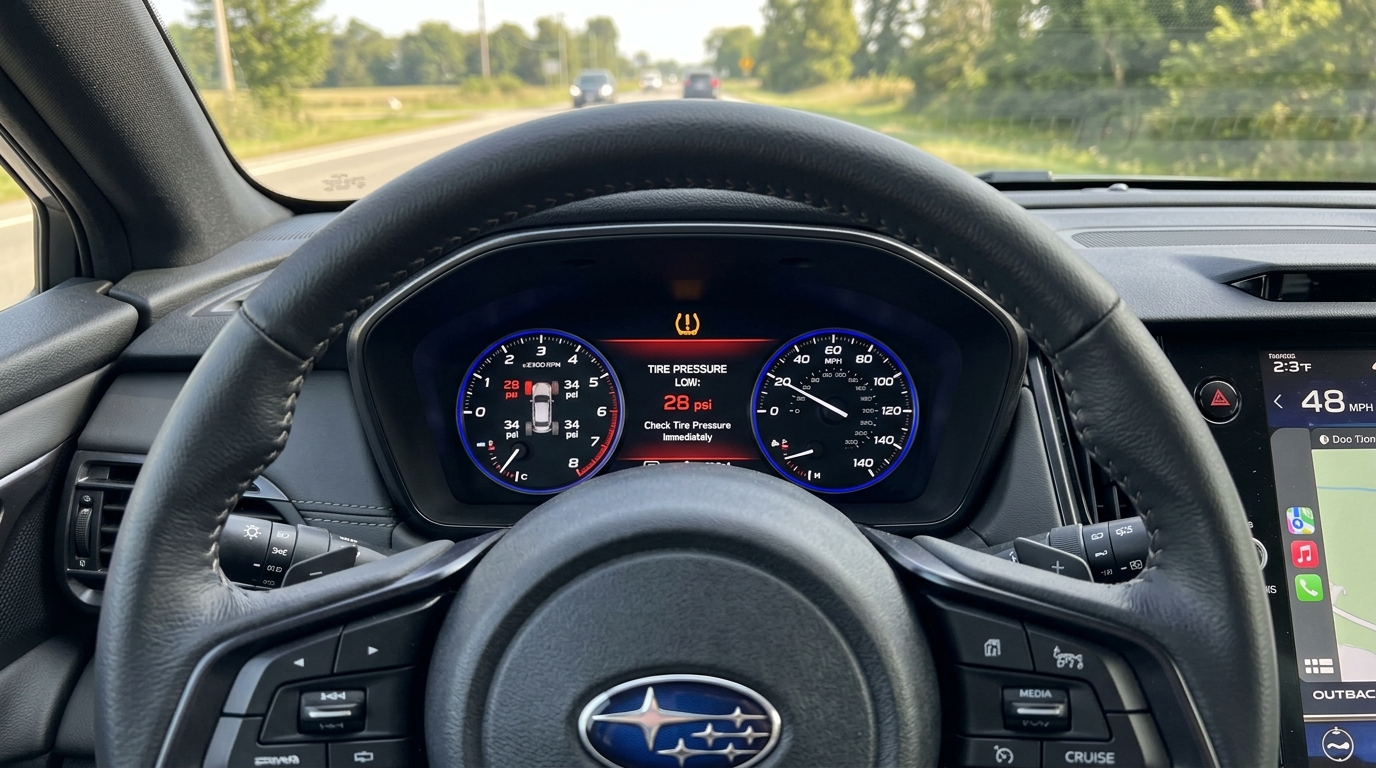
What is TPMS? Your Tire Pressure Monitoring System is a safety feature that alerts you when pressure drops 25% below the recommended level. In summer, it can also alert you to over-inflation or sensor malfunctions caused by extreme heat.
Weather Shifts Chicago's sudden temperature drops (like a cold front off the lake) can trigger the TPMS light. If the light comes on in the morning and goes off as the day warms up, your baseline pressure is likely too low.
System Reset Most modern Subarus will automatically reset the light once the correct pressure is restored and the vehicle is driven for a few miles. If yours stays on, it might indicate a puncture or a failing sensor.
Professional Tire Care at Berman Subaru of Chicago
At Berman Subaru of Chicago, we don't just sell cars; we maintain the bond between you and the road. Our service center at 4330 W Irving Park Rd is equipped with state-of-the-art diagnostic tools to handle everything from simple PSI adjustments to complex AWD drivetrain calibrations. Summer in Chicago is short—don't spend it worrying about your tires. Let us handle the technical details so you can focus on the destination. We offer nitrogen tire inflation as an alternative to standard compressed air. Nitrogen molecules are larger and less affected by temperature swings, meaning your tire pressure stays more consistent throughout the hot Chicago summer. This is an excellent option for Subaru owners who want the ultimate in performance and stability. Whether you need a quick check or a full set of new rubber, Order Genuine Subaru Parts or schedule an appointment today to experience the Berman difference.
Tire Rotation and Alignment Essentials
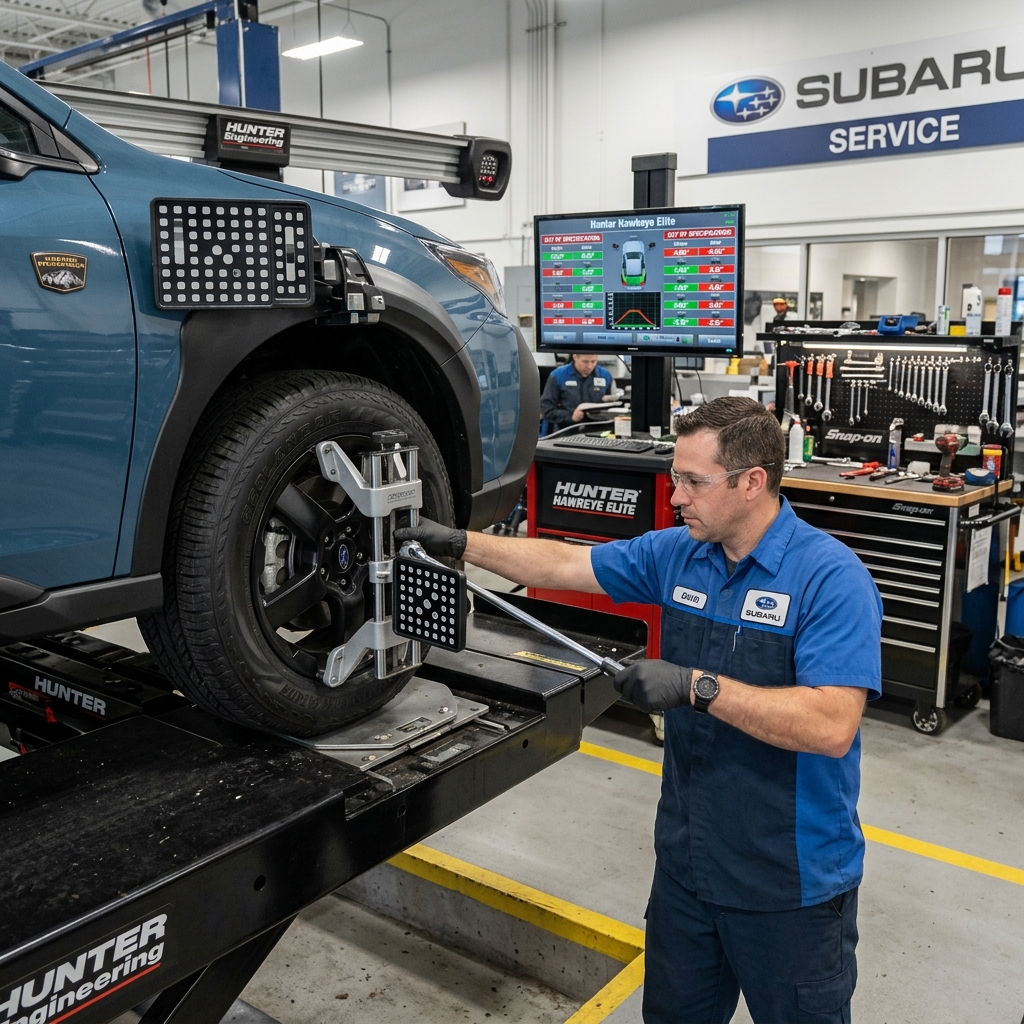
Proper inflation is only half the battle. To protect your Subaru's Symmetrical AWD system, your tires must wear evenly across all four corners. If one tire is significantly more worn than the others—even by as little as 2/32nds of an inch—it can create stress on the drivetrain as the different wheel speeds fight each other. Regular tire rotations, typically every 6,000 miles, are the best way to ensure this even wear. Summer is also the perfect time to check your alignment. Chicago's winter potholes often knock wheels out of alignment, and driving on misaligned wheels in the summer heat accelerates tread wear and further decreases fuel efficiency. If your Subaru pulls to one side or the steering wheel is off-center, it's a clear sign you need a professional alignment check.
Essential Summer Tire Tools for Your Trunk
Digital Pressure Gauge Avoid the cheap 'pencil' style gauges. A high-quality digital gauge provides much more accurate readings, which is essential when you're trying to hit a specific PSI for your Subaru's AWD system.
Portable Tire Inflator A 12V portable compressor allows you to adjust your pressure at home in the morning ('cold') without having to drive to a gas station. This is the most reliable way to maintain consistent PSI.
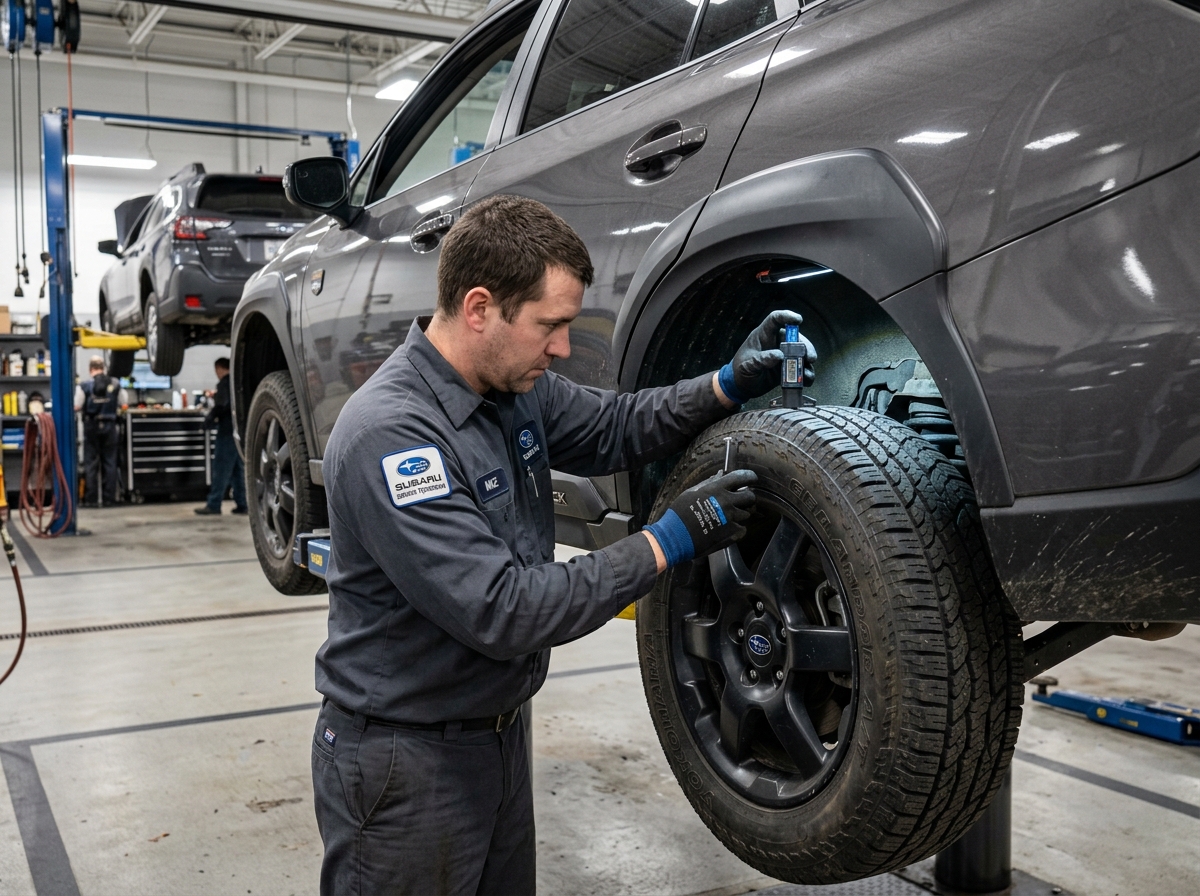
Tread Depth Tool A simple tread depth gauge helps you monitor wear patterns. If you notice the center wearing faster than the edges, you're likely over-inflating your tires during the summer heat.
Handling Pothole Damage on Summer Roads
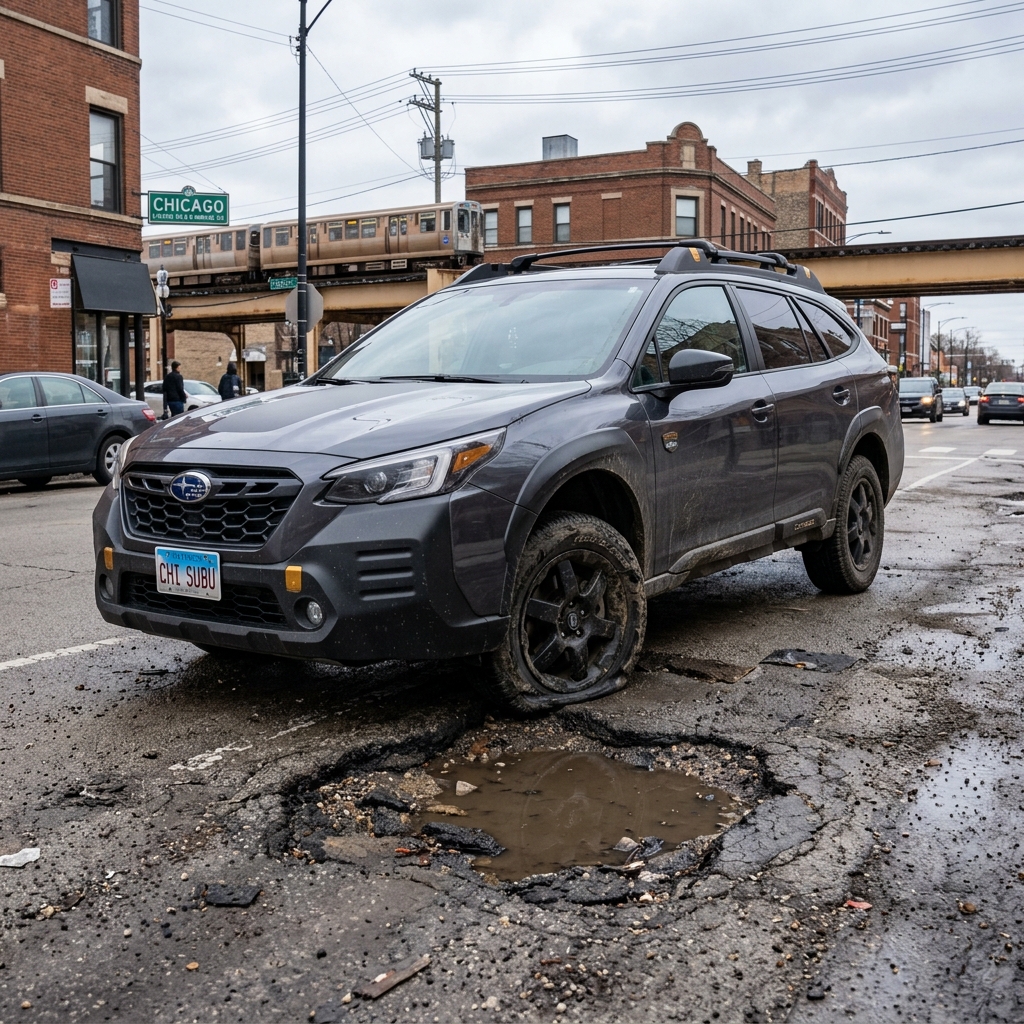
Chicago's infrastructure is notorious, and summer heat can actually make some road issues worse as asphalt softens and expands. When your tires are over-inflated due to heat, they have less 'give' when hitting a pothole. This increases the force transferred to the wheel rim and the sidewall, often resulting in 'bubbles' or internal structural failures that are not immediately visible. Regularly inspecting your sidewalls for bulges or tears is vital. If you do hit a significant hole on Irving Park Rd, stop by Berman Subaru of Chicago for a quick inspection. If you're tired of worrying about road damage, it might be time to Browse Used Inventory for a model with higher-profile tires that offer more protection.
Planning Your Next Adventure?
Before you load up the Outback for a trip to the Northwoods or a cross-country journey, ensure your Subaru is as ready as you are. A full multi-point inspection is the best insurance against mechanical issues on the road. We'll check your fluids, brakes, battery health (which also suffers in the heat), and of course, your tire pressure and tread depth. If your current vehicle isn't up for the task, consider checking out our Shop Courtesy Vehicles for a like-new Subaru that's ready for any adventure. Don't forget to Get Pre-Approved for Financing if you're considering a new or used upgrade this season. Our team is here to make your transition into a newer, safer Subaru as smooth as possible.
The Impact of Cargo Weight on PSI
Summer often means hauling heavy loads—coolers, camping gear, bike racks, or even small trailers. Extra weight puts additional stress on your tires, causing the sidewalls to flex more. This friction generates even more heat, compounding the issues already caused by the summer sun. For vehicles like the Subaru Ascent or Outback, the manufacturer often recommends increasing the rear tire pressure when the vehicle is fully loaded to maintain stability and prevent overheating. Check your owner's manual or the door placard for 'heavy load' recommendations. Failing to adjust for cargo weight can lead to 'squirmy' handling and increased stopping distances. If you're unsure how to calculate the correct pressure for your loaded Subaru, our team is always available to provide expert guidance.
Remember that the maximum PSI listed on the tire's sidewall is *not* the recommended pressure; it is the absolute limit the tire can hold. Always follow the Subaru-specific recommendations found on your vehicle's placard. Over-loading and over-inflating is a dangerous combination that can lead to catastrophic tire failure. Stay safe by staying within the engineered limits of your tires and your vehicle's payload capacity.
Safety First: Tread Depth and Rubber Health
The Penny Test Insert a penny into your tread with Lincoln's head facing down. If you can see the top of his head, your tread is below 2/32nds and your tires are unsafe for summer rainstorms.
Dry Rot Check Look for small cracks in the sidewall or between tread blocks. High UV exposure in Chicago summers can accelerate 'dry rot,' making the tire brittle and prone to failure.
Hydroplaning Risk Worn tires cannot effectively channel water away. In a heavy Chicago downpour, even a Subaru's AWD cannot save you if your tires lose contact with the road surface.
Your Chicago Subaru Summer Maintenance Partner
Maintaining your Subaru's tire pressure during the Chicago summer isn't just about following a checklist—it's about protecting your investment, your family, and your driving experience. From the technical demands of the Symmetrical AWD system to the physical realities of expanding air in the heat, being a proactive Subaru owner pays dividends in safety and savings. At Berman Subaru of Chicago, we are committed to being your trusted resource for all things automotive. Whether you need a simple pressure check, a professional alignment, or a brand-new set of performance tires, our team at 4330 W Irving Park Rd is ready to serve you. Enjoy the Chicago summer with the peace of mind that only a well-maintained Subaru can provide. Call us at (708) 943-9726 today or visit us online to get started.