The Impact of Chicago Roads on Your Subaru's Precision Suspension
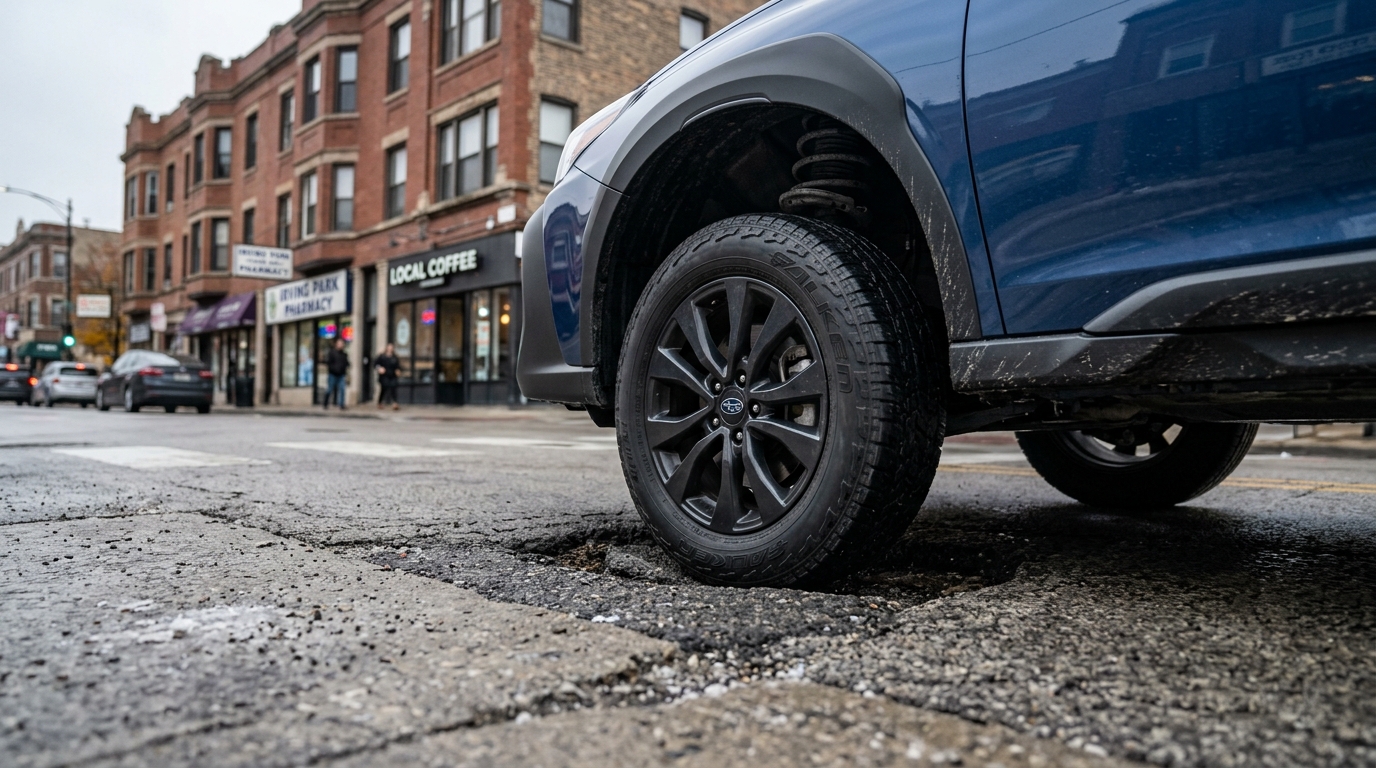
Maintaining the legendary handling of a vehicle like the 2026 Subaru Outback requires more than just routine oil changes; it requires a deep respect for the precision of the suspension system. In a neighborhood like Irving Park, the daily commute involves navigating a complex landscape of historic streets and busy commercial corridors. While the AWD drivetrain and Symmetrical All-Wheel Drive are designed for durability, the constant vibration from uneven pavement and the occasional impact from deep winter potholes can gradually knock your wheels out of their factory-specified alignment angles.
When your suspension geometry is perfectly set, your tires maintain optimal contact with the road, ensuring that the 2.5L H4 engine's power is distributed efficiently. However, Chicago road hazards—ranging from seasonal freeze-thaw cycles to heavy plowing—can displace suspension components. Even a minor shift in the camber or toe settings can lead to increased rolling resistance. This doesn't just affect your ride comfort; it forces your engine to work harder, potentially impacting the EPA-estimated fuel economy figures fuel economy that makes the Outback such a practical choice for urban professionals.
If you suspect your vehicle is no longer tracking as it should, our certified technicians are ready to perform a comprehensive diagnostic. You can find us at our Irving Park Road location, where we use specialized equipment to restore your Subaru to its original specifications. For immediate assistance regarding a recent road impact or to discuss your maintenance schedule, give our service team (708) 943-9726 a quick call.
Table of Contents
- Common Warning Signs Your Subaru Needs an Immediate Alignment Check
- The Technical Reality of Subaru Symmetrical AWD and Four-Wheel Alignments
- How Often to Schedule an Alignment Check and the Post-Pothole Protocol
- What to Expect During a Professional Subaru Alignment Service
- Simple At-Home Inspections and Proactive Care for Your Subaru Tires
- Frequently Asked Questions About Subaru Alignment
- Ensure Your Subaru is Ready for the Road Ahead
Common Warning Signs Your Subaru Needs an Immediate Alignment Check
Does your steering wheel feel like it has a mind of its own? One of the most frequent indicators of misalignment is a vehicle that actively drifts or "pulls" to one side when you are driving on a flat, straight road. In a precision-engineered model like the 2026 Subaru Forester, the steering wheel should remain perfectly centered. If you find yourself constantly applying pressure to the left or right just to maintain a straight path, your suspension geometry has likely been compromised.
Another critical sign is uneven or rapid tire wear. We recommend a visual inspection of your tread every few weeks. If the inside or outside edges of your tires appear smoother than the center, it is a clear symptom of incorrect camber or toe settings. Neglecting this doesn't just cost you a set of tires; it places unnecessary stress on your wheel bearings and tie rod ends. If we discover that your suspension components have sustained damage, we only use genuine Subaru parts to ensure the replacement matches the exact metallurgical standards of your original factory equipment.
You might also notice a "loose" or wandering sensation in the steering, or even a persistent vibration at highway speeds. While vibrations can sometimes be attributed to wheel balance, they often occur in tandem with alignment issues after a significant impact. Because Subaru models utilize sophisticated safety systems like EyeSight Driver Assist Technology, keeping the mechanical foundation of the vehicle stable is essential for the sensors to function as intended.
The Technical Reality of Subaru Symmetrical AWD and Four-Wheel Alignments
A common misconception among drivers is that a front-end alignment is sufficient for most vehicles. However, because every model in our lineup—from the compact 2026 Subaru Crosstrek to the spacious Forester—features a driven rear axle, a four-wheel alignment is the only way to ensure total vehicle harmony. In a Symmetrical All-Wheel Drive system, the front and rear wheels must be perfectly synchronized to prevent the center differential from working overtime to compensate for dragging or misaligned tires.
If the rear wheels are not tracking directly behind the front wheels—a condition known as an incorrect thrust angle—the vehicle may "dog-track" down the road. This creates lateral loads that the suspension was never designed to handle. For owners of the 2026 Subaru Crosstrek, maintaining this balance is vital for preserving the 28 city / 34 hwy efficiency and the nimble handling characteristics that define the model. Proper alignment ensures that the CVT can deliver power smoothly without fighting against the friction of a tire that is effectively being dragged sideways.
We invest in the latest computerized alignment technology that contains the specific factory specs for every trim level, including the Sport and Limited variants. This allows our technicians to measure angles down to the hundredth of a degree. While you are here for your alignment check, you can also explore our current offers if you are considering moving into a newer model with the latest safety and performance enhancements.
How Often to Schedule an Alignment Check and the Post-Pothole Protocol
How frequently should you have your alignment verified? As a general rule of professional maintenance, we recommend an alignment check at least once a year or every 12,000 miles. However, living in a climate with harsh winters and heavy road salt use means your suspension is under constant duress. Many of our neighbors find that scheduling a check during their seasonal tire changeover is the most convenient way to ensure their vehicle remains reliable throughout the year.
The "Post-Pothole Protocol" is something every Chicago driver should memorize. If you experience a significant impact—the kind that makes you wince behind the wheel—you should not wait for your next service interval. A single hard strike against a curb or a deep crater in the asphalt can immediately bend a control arm or knock a tie rod out of place. Watch for immediate changes in how the car tracks or any new noises when turning.
It is also important to note that wheel alignment is considered a wear item under the Subaru Limited Warranty, covered according to current Subaru warranty terms. Beyond that window, maintaining the alignment is the responsibility of the owner. Proactive checks are far more cost-effective than replacing a set of prematurely worn tires or repairing damaged AWD components that have been stressed by a misaligned chassis.
What to Expect During a Professional Subaru Alignment Service
When you bring your vehicle to us, the process begins with a comprehensive pre-alignment inspection. Our technicians don't just hook the car up to a machine; they manually inspect the ball joints, bushings, and strut mounts. If a component is worn or "sloppy," a precision alignment won't hold, as the wheel will simply shift back out of spec as soon as you hit the road. We ensure the foundation is solid before making any adjustments to the camber, caster, or toe.
Once the physical inspection is complete, we mount laser sensors to all four wheels. These sensors communicate with our computer system to provide a real-time digital map of your vehicle's current stance. We then meticulously adjust the suspension until it perfectly matches the factory specifications for your specific model year. This level of accuracy is what separates a professional service from a "basic" shop. Before you visit, be sure to browse our service specials for current offers on maintenance bundles.
After the adjustments are locked in, we perform a road test to verify that the steering wheel is dead-center and that the vehicle tracks straight under various driving conditions. We provide you with a detailed printout showing the "before" and "after" measurements so you have total transparency regarding the work performed. You can easily book your service appointment online to find a time that fits your busy schedule.
Simple At-Home Inspections and Proactive Care for Your Subaru Tires
While a professional alignment requires specialized tools, there are several checks you can perform in your own driveway to monitor your Subaru's health. Start by running your hand across the tread of your tires. If you feel "feathering"—where the edges of the tread blocks feel sharp in one direction but smooth in the other—it is a classic sign of a toe-in or toe-out issue. You should also check your tire pressure regularly; uneven pressure can mimic the symptoms of misalignment and put unnecessary strain on your AWD system.
Another simple test is the "relaxed grip" check. On a flat, empty stretch of road, safely and momentarily loosen your grip on the steering wheel. If the car immediately veers toward the shoulder, it is time for a professional evaluation. Keeping your tires rotated every 6,000 miles, as recommended in the Subaru maintenance schedule, will also help you spot wear patterns early before they become expensive problems.
If you notice anything unusual during your at-home check, don't hesitate to stop by our service center in Chicago for a quick inspection. Our team is dedicated to helping keep your family confident on the road, whether you are commuting through Rogers Park or heading out on a weekend adventure. For any questions about tire longevity or suspension care, you can reach us at (708) 943-9726.
Frequently Asked Questions About Subaru Alignment
Q: Does the Subaru EyeSight system require a special alignment procedure?
While the alignment itself focuses on the mechanical suspension, the EyeSight Driver Assist Technology relies on the vehicle tracking straight to accurately monitor lane markings and traffic. If the alignment is severely off, it can affect the camera's perspective. Our technicians ensure that the mechanical alignment is perfect so your safety systems can function with maximum accuracy.
Q: Why is my steering wheel crooked even though the car drives straight?
This is often a sign that the "front toe" is set correctly relative to the wheels, but the "thrust angle" (the direction the rear wheels are pointing) is off-center. This causes the car to travel straight but requires the steering wheel to be turned slightly to compensate. A full four-wheel alignment corrects this by aligning all four wheels to the vehicle's geometric centerline.
Q: Can I just get a front-end alignment on my Crosstrek?
We strongly advise against it. Because the Crosstrek uses Symmetrical All-Wheel Drive, the rear suspension is adjustable and plays a vital role in how the vehicle handles. A front-end-only alignment ignores half of the system and can lead to uneven wear on the rear tires and increased strain on the drivetrain.
Q: How long does a professional alignment service typically take?
For most Subaru models, a standard four-wheel alignment takes about 60 to 90 minutes. This includes the initial suspension inspection, the computerized measurements, the adjustments, and the final road test. If we find worn parts that need replacement, we will provide a clear estimate of the additional time required.
Q: Will a wheel alignment fix a vibration in my steering wheel?
Not necessarily. While misalignment can cause a "shudder" if the tires are fighting each other, a distinct vibration at specific speeds is usually caused by unbalanced wheels or a bent rim. During our pre-alignment check, we evaluate your tires and wheels to determine if a balance service is needed alongside the alignment.
Ensure Your Subaru is Ready for the Road Ahead
The best way to protect your investment and ensure the longevity of your vehicle is through proactive maintenance. A properly aligned Subaru is safer, more fuel-efficient, and more enjoyable to drive, especially when navigating the challenging road conditions often found in Rogers Park and the surrounding areas. By addressing alignment issues early, you prevent the "domino effect" of wear that can lead to expensive suspension repairs and premature tire replacement.
Our team at Berman Subaru of Chicago is committed to providing transparent, expert care for your vehicle. Whether you are driving a 2026 Subaru Forester or an older model, we have the specialized knowledge and tools to keep it performing at its peak. Don't wait for a minor pull to become a major safety concern; reach out to us today to ensure your Subaru is tracking straight and true.
© 2026 Berman Subaru of Chicago. All rights reserved.