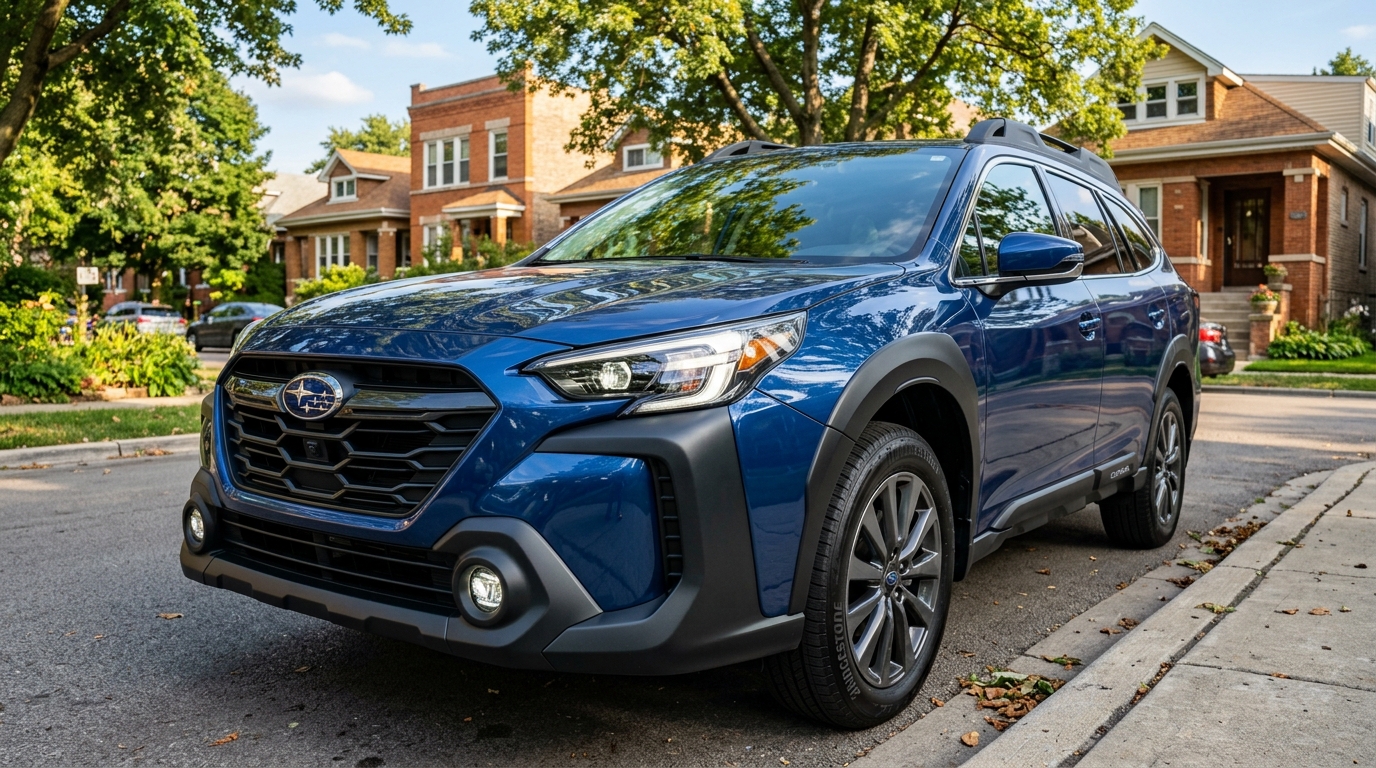
You should use genuine Original Equipment Manufacturer (OEM) parts for all critical powertrain, safety, and electronic systems on your Subaru, while high-quality aftermarket parts are acceptable for non-critical, high-wear items like wiper blades, cabin air filters, and floor liners. Genuine Subaru components are designed for exact factory fit, can help support factory warranty coverage, and help maintain system synchronization—especially for complex features like EyeSight® Driver Assist Technology and Symmetrical All-Wheel Drive. Non-OEM parts on sensitive mechanical systems carry risks of premature wear, component failure, or denied warranty claims if a third-party part causes damage.
Subaru vehicles are engineered with tight mechanical tolerances that rely on precise material standards. A new Subaru includes factory warranty coverage, featuring a bumper-to-bumper warranty for 3 years or 36,000 miles and a powertrain warranty covering 5 years or 60,000 miles. Under federal law established by the Magnuson-Moss Warranty Act, using an aftermarket component does not automatically void your entire vehicle warranty. However, if a non-OEM part fails or directly causes damage to an adjacent system, Subaru can deny warranty coverage for that specific repair.
For local owners navigating heavy stop-and-go commuting along Irving Park Road, maintaining original factory performance is essential for long-term daily reliability. Using genuine components ensures that every system operates exactly as factory engineers intended. You can order genuine Subaru replacement parts directly through our website or speak with our knowledgeable service advisors by calling (708) 943-9726. If you prefer to consult with our parts specialists in person, visit our Chicago service facility at 4330 W Irving Park Rd, Chicago, IL 60641.
Table of Contents
- What Is the Difference Between OEM, OES, and Aftermarket Subaru Parts?
- Which Subaru Systems Are Most Sensitive to Aftermarket Component Quality?
- Which Subaru Maintenance Tasks and Upgrades Can Use Aftermarket Parts?
- Why Are Genuine OEM Parts Required for Subaru Collision Repairs and Safety Systems?
- Frequently Asked Questions About Subaru Parts and Warranty Protection
- Keep Your Subaru Operating Safely with Genuine Components
What Is the Difference Between OEM, OES, and Aftermarket Subaru Parts?
OEM parts are manufactured by Subaru or its contract partners under official Subaru branding, Original Equipment Supplier (OES) parts are produced by identical factory suppliers but sold under third-party brand names, and aftermarket parts are independently engineered components that vary widely in quality and fitment. Understanding these distinctions helps vehicle owners balance part cost against long-term mechanical protection.
- OEM (Original Equipment Manufacturer) Parts: These components are built specifically for Subaru vehicles using exact factory molds, metallurgy, and quality standards. Distributed exclusively through authorized channels, genuine parts carry official Subaru part numbers and packaging. They include a dedicated manufacturer parts warranty, typically covering 12 months or unlimited mileage.
- OES (Original Equipment Supplier) Parts: Major Tier-1 automotive manufacturers like Denso, Aisin, KYB, NGK, and Akebono produce components directly for Subaru assembly lines. When these same companies sell parts under their own brand names rather than in a Subaru box, they are classified as OES. These components match OEM specifications and quality without the vehicle manufacturer branding markup.
- Aftermarket Parts: Manufactured independently by third-party companies, aftermarket options range from high-tier certified components to low-cost universal-fit items. Top-tier aftermarket manufacturers hold certifications such as CAPA (Certified Automotive Parts Association) or IATF 16949, ensuring close adherence to factory specifications. However, non-certified budget aftermarket components often sacrifice material quality or precise dimensions to lower retail costs.
The price premium associated with genuine Subaru parts reflects extensive vehicle-specific research and development, destructive testing, exact alloy compositions, and full warranty backing. When maintaining your vehicle, reviewing our current service specials offers an effective way to secure genuine factory components while keeping routine maintenance costs manageable.
Which Subaru Systems Are Most Sensitive to Aftermarket Component Quality?
Subaru Boxer engines, Symmetrical All-Wheel Drive mechanicals, and EyeSight® Driver Assist Technology sensor networks are exceptionally sensitive to aftermarket part quality variations. Deviating from original engineering specifications in these core systems frequently leads to mechanical issues, warning lights, or reduced performance.
- Engine Oil Filters & Bypass Pressure: The horizontally opposed 2.5-liter Boxer engine features a top-mounted oil filter with a specialized bypass valve pressure rating (often 23 PSI). Most universal aftermarket oil filters are built with significantly lower bypass pressure settings (8 to 11 PSI). During cold winter starts, a low-pressure aftermarket valve can open prematurely, circulating unfiltered engine oil or causing momentary oil starvation. If an unapproved filter collapses and starves the engine, resulting in severe internal damage, warranty coverage for the repair will be denied.
- Ignition Systems & Spark Plugs: Subaru Boxer engines require exact electrode gaps and thermal heat ranges, typically specified with NGK iridium or platinum spark plugs. When non-OEM spark plugs are installed, improper heat dissipation often causes cylinder misfires, engine hesitation, and rough idling. When owners visit our service center complaining of engine hesitation on a Forester running a 2.5-liter Boxer engine, our technicians frequently discover non-spec spark plugs installed during an outside tune-up.
- Sensors & Fuel Management: Components like mass air flow (MAF) sensors and oxygen sensors manufactured by OES suppliers like Denso deliver precise voltage signals to the Engine Control Unit (ECU). Generic aftermarket sensors frequently output inaccurate readings, causing the ECU to alter fuel mixtures. This can degrade efficiency below the factory rating of 26 mpg city / 33 mpg highway on models like the Forester.
- Drivetrain & Axles: Symmetrical All-Wheel Drive depends on matching tire rolling circumferences and exact axle shaft lengths. Cheap aftermarket CV axles often cause severe drivetrain vibrations and premature hub bearing wear.
While checking current vehicle specials highlights how advanced modern Subaru engineering has become, protecting your existing vehicle requires using components built to match those exact factory standards.
Which Subaru Maintenance Tasks and Upgrades Can Use Aftermarket Parts?
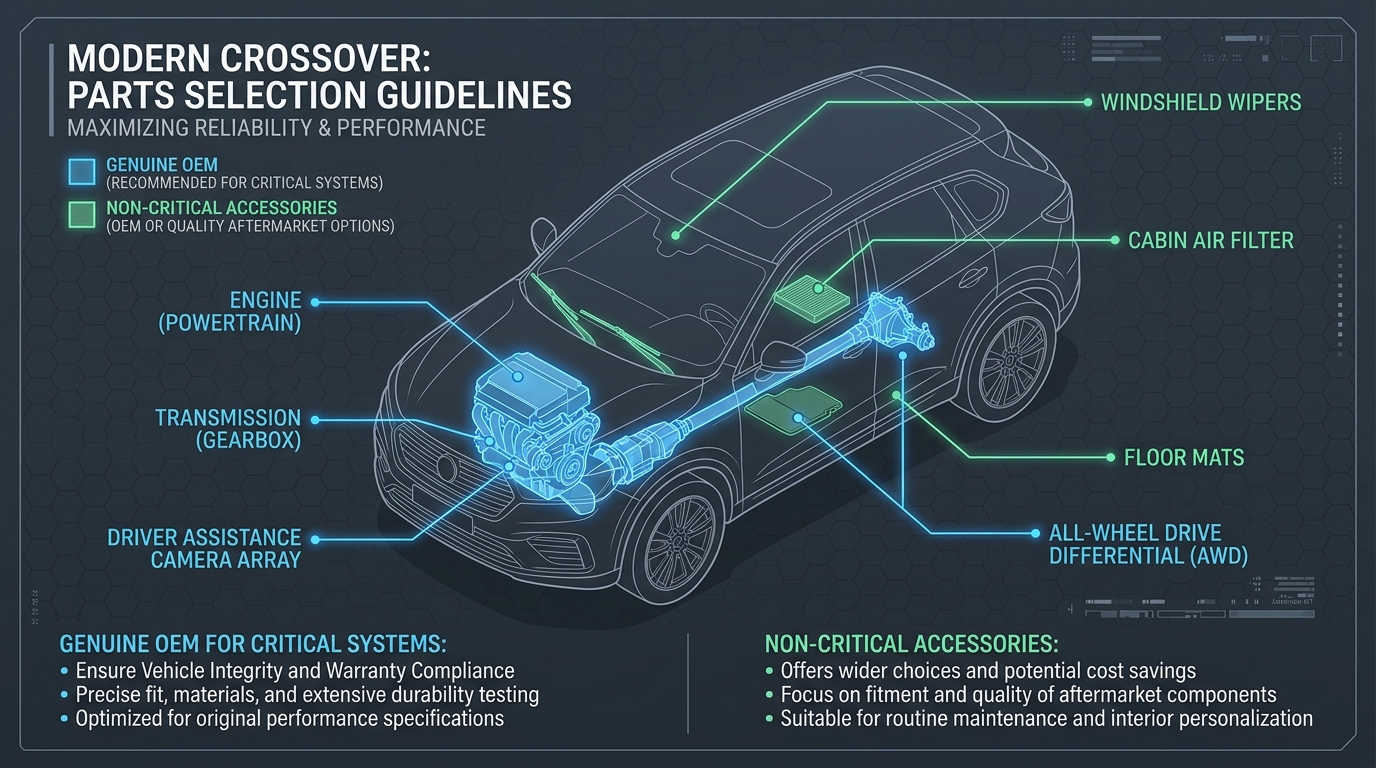
Basic DIY maintenance tasks like replacing cabin air filters, engine air intake filters, windshield wiper blades, floor mats, and non-critical trim accessories are safe and suitable for quality aftermarket parts. These items do not directly impact core engine mechanics, drivetrain balance, or active safety systems.
For routine cosmetic and convenience items, reputable aftermarket manufacturers offer durable options that perform well. High-quality aftermarket cabin filters and windshield wipers meet or exceed daily driving demands. Similarly, heavy-duty floor liners provide excellent interior protection against mud and slush. When considering performance modifications, high-end aftermarket components—such as upgraded sway bars or heavy-duty suspension struts—can offer increased stiffness or heat tolerance for off-road use. However, these performance parts often introduce trade-offs, such as stiffer ride quality, increased cabin road noise, or accelerated wear on stock rubber suspension bushings.
Certain maintenance items should almost always remain genuine OEM components:
- Engine oil filters and crush washers
- Positive Crankcase Ventilation (PCV) valves
- Thermostats and main cooling system hoses
- Head gaskets and timing belt kits
- Linear Tronic CVT specialized transmission fluid
- EyeSight®-compatible windshield glass
Drivers handling salt-heavy winter slush along the Lake Michigan shoreline near Rogers Park understand how demanding local weather can be on vehicle hardware, making factory-tested protective parts essential for undercarriage longevity. To ensure your vehicle receives proper care using verified components, you can schedule a service appointment online with our factory-trained technical team.
Why Are Genuine OEM Parts Required for Subaru Collision Repairs and Safety Systems?
Genuine OEM parts are necessary for Subaru collision repairs because structural body components and glass are engineered for precise crash energy absorption and exact calibration with active safety sensors. Using non-OEM parts following an accident can compromise the vehicle's structural integrity and disable driver-assist features.
EyeSight® Driver Assist Technology utilizes dual stereo cameras mounted behind the upper windshield to monitor road conditions, control adaptive cruise control, and trigger pre-collision braking. Factory Subaru windshields are manufactured with optical clarity, exact glass thickness, and curvature designed specifically for camera vision. Non-OEM glass frequently features slight distortion or uneven tinting that can refract light, causing camera blindness, false collision alerts, or complete system shutdown.
Beyond glass, modern collision repair involves complex electronic calibration:
- Bumper Covers & Radar Units: Blind-spot detection and rear cross-traffic sensors operate behind the rear bumper cover. Genuine Subaru bumper covers feature controlled plastic density and paint thickness, whereas aftermarket panels may disrupt radar signals.
- Structural Energy Management: Frame rails, pillars, and impact beams utilize high-strength steel heat-treated for controlled crumple behavior. Non-certified body panels may fold unpredictably during a collision, altering how crash energy reaches the passenger cabin.
- Restraint Systems: Airbags, seatbelt pretensioners, and crash sensors must always be replaced with brand-new genuine OEM components to ensure proper deployment timing.
- Warranty Compliance: Subaru Added Security extended service agreements mandate that covered repairs use new or remanufactured Genuine Subaru Parts, preserving long-term structural and safety integrity.
Frequently Asked Questions About Subaru Parts and Warranty Protection
Q: Does using aftermarket parts void my Subaru factory warranty?
Under the federal Magnuson-Moss Warranty Act, installing an aftermarket part does not automatically void your Subaru 3-year or 36,000-mile new vehicle warranty or 5-year or 60,000-mile powertrain warranty. However, if a non-genuine component directly causes or contributes to a mechanical failure, Subaru can deny warranty coverage for that specific repair cost.
Q: Why do genuine OEM Subaru parts cost more than aftermarket alternatives?
Genuine Subaru parts carry higher initial costs because they undergo model-specific engineering, crash testing, and strict quality control verification. They are designed for exact fitment and long-term durability, backed by a dedicated manufacturer parts warranty of 12 months or unlimited mileage, whereas budget aftermarket options cut costs using universal designs.
Q: What happens if an aftermarket oil filter damages a Subaru Boxer engine?
If an aftermarket oil filter fails due to incorrect bypass valve pressure or seal leakage, internal engine starvation can cause severe mechanical damage. Because the destruction resulted from an unapproved third-party component, Subaru will deny warranty coverage, leaving the vehicle owner fully responsible for engine replacement costs.
Q: Can non-OEM spark plugs cause misfires in a Subaru Boxer engine?
Non-OEM spark plugs frequently feature improper heat ranges or incorrect electrode gaps that disrupt combustion in Boxer engines. This discrepancy leads to cylinder misfires, unburned fuel entering the exhaust, engine hesitation, and potential damage to catalytic converters. Factory-specified NGK iridium plugs maintain exact ignition timing.
Q: Are remanufactured Subaru components considered genuine OEM parts?
Remanufactured genuine Subaru components are authentic factory parts that have been disassembled, inspected, cleaned, and rebuilt using brand-new original wear components to match factory specifications. They provide identical reliability and warranty protection as new OEM parts at a lower cost, making them ideal for alternators and starters.
Keep Your Subaru Operating Safely with Genuine Components
Choosing genuine OEM Subaru parts protects your vehicle's engineering integrity, maintains advanced safety calibration, and safeguards your factory warranty coverage. While aftermarket options work well for simple cosmetic items and air filters, critical engine, drivetrain, and collision repairs require factory-certified components to deliver lasting performance.
Our team is dedicated to providing high-quality care for your vehicle using authentic factory components and specialized equipment. To discuss your maintenance needs with our parts specialists, call our service department at (708) 943-9726 today. You can also visit our Chicago service center at 4330 W Irving Park Rd, Chicago, IL 60641 for professional maintenance, diagnostic support, and genuine replacement components.
© 2026 Berman Subaru of Chicago. All rights reserved.