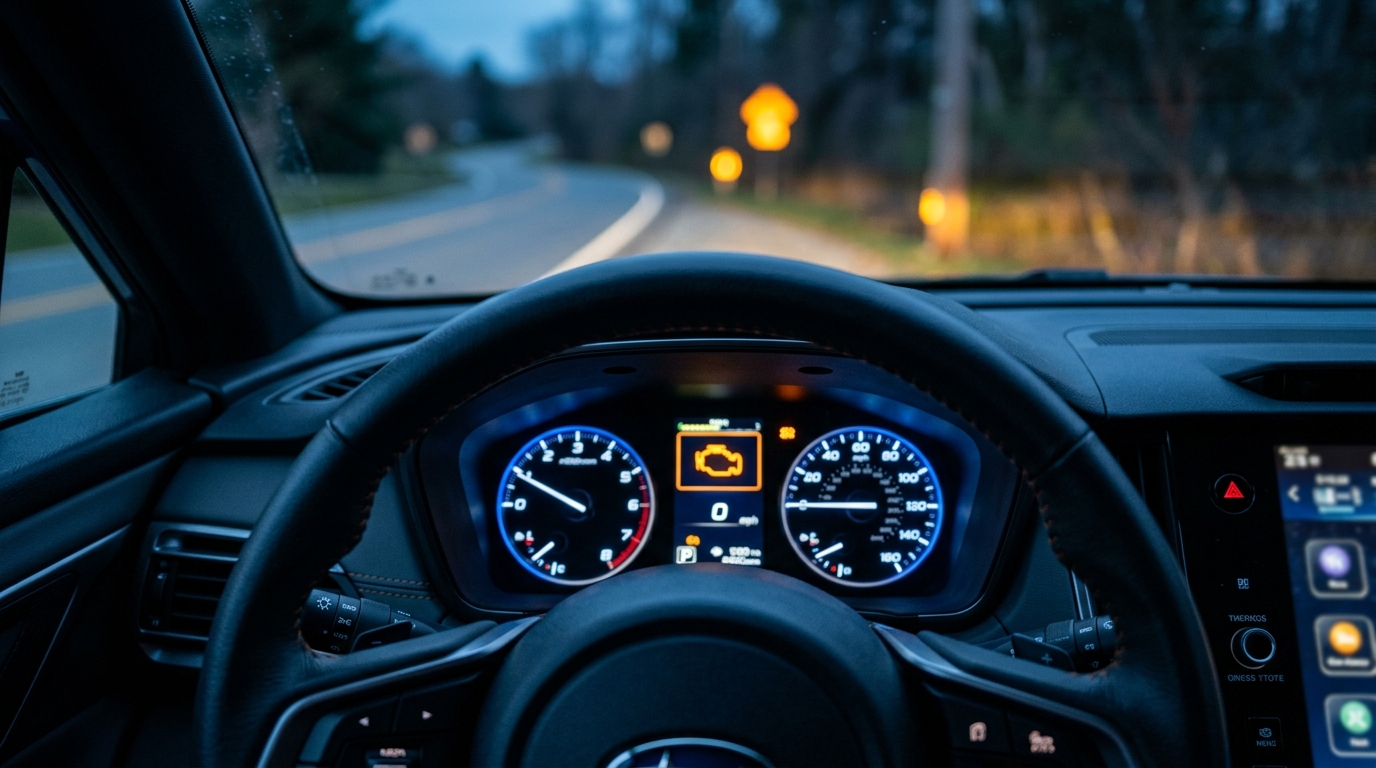
A glowing warning light on your dashboard is designed to capture your attention before a minor issue escalates into a costly repair. When the engine control computer detects an issue, it illuminates the check engine light to notify you that a diagnostic trouble code has been stored. Understanding the behavior of this light is the first step in determining how to proceed safely.
A solid, steady light indicates that the computer has detected a fault in an emissions or engine component, but the issue is not currently causing immediate damage to the powertrain. In this scenario, the vehicle is generally safe to drive cautiously for a short period, allowing you to arrange a diagnostic scan without immediate panic. However, ignoring a solid light can eventually lead to reduced fuel economy, poor engine performance, or accelerated wear on exhaust components.
A flashing or blinking check engine light represents an urgent mechanical emergency. According to the reference guide, Every Dashboard Warning Light In Your Subaru Explained, a flashing light indicates an active engine misfire severe enough that continued operation can quickly destroy the catalytic converter. When a misfire occurs, unburned fuel is pumped directly into the exhaust system, where it ignites and melts the delicate internal structure of the converter.
If you experience a flashing dashboard light, you should pull over safely, turn off the ignition, and contact Subaru Roadside Assistance at 1-800-261-2155. This manufacturer-backed program ensures your vehicle is towed directly to an authorized facility where certified technicians can perform repairs using genuine parts, preserving your warranty protection. For drivers navigating the daily stop-and-go commute on Irving Park Road near the Metra station, a sudden warning light can disrupt a busy schedule. If you are nearby, you can find directions to our service center on Irving Park Road or give our service team a call at (708) 943-9726 to discuss your vehicle's symptoms.
Table of Contents
- Oxygen Sensors and Catalytic Converters: Common Emissions Triggers on Subaru Engines
- Can a Loose Gas Cap Trigger Your Subaru Check Engine Light?
- How Subaru Starlink and EyeSight Technology Respond to Engine Fault Codes
- Clearing Subaru Trouble Codes and Navigating Federal Emissions Warranty Coverage
- Common Questions About Subaru Diagnostic Trouble Codes
- Schedule Certified Subaru Diagnostic and Repair Services
Oxygen Sensors and Catalytic Converters: Common Emissions Triggers on Subaru Engines
Exhaust and emissions components represent some of the most frequent reasons for an illuminated warning light on modern boxer engines. Failed oxygen sensors and catalytic converter efficiency faults are common emissions-related issues across modern engine families, including the FB25, FB20, FA20, and EJ series. These sensors monitor the oxygen content in the exhaust gases to help the engine computer adjust the air-fuel mixture for optimal efficiency and performance.
When an oxygen sensor begins to fail or sends readings outside the expected parameters, the computer stores a diagnostic trouble code and illuminates the dashboard light. Replacing an oxygen sensor typically varies in cost depending on the specific model and sensor location. Because Chicago winters bring heavy road-salt use, undercarriage corrosion is a common culprit that accelerates the wear of these vital sensors and their electrical connectors.
If a faulty sensor is ignored, it can lead to a more expensive catalytic converter failure. The engine computer may store code P0420, which indicates that the catalytic converter's efficiency has fallen below the required threshold. While this code can sometimes be triggered by a minor exhaust leak or a failing sensor, a worn-out catalytic converter is a much more significant repair. While keeping your current vehicle running smoothly is our top priority, some owners facing major emissions repairs choose to look at new vehicle specials instead of investing in older components.
Can a Loose Gas Cap Trigger Your Subaru Check Engine Light?
Many drivers are surprised to learn that a simple, non-mechanical component can trigger the exact same dashboard warning as a major engine fault. A loose, cracked, or damaged fuel cap is one of the most common causes of an illuminated check engine light. The fuel system is completely sealed to prevent fuel vapors from escaping into the atmosphere.
When the cap is not tightened properly, the evaporative emissions system detects a pressure leak during its self-diagnostic routine. According to the Everyday Subaru Owner’s Guide to Check Engine Lights and Codes, this system is highly sensitive and will flag even a microscopic leak as a potential fault, storing an EVAP code and lighting up the dashboard.
Driving with a loose gas cap is generally low risk for short distances, but it should be corrected promptly to avoid fuel vapor loss and continued check engine warnings. If your light illuminates shortly after a visit to the fuel pump, park the vehicle safely, remove the cap, and reinstall it, tightening it until it clicks at least once. It may take several normal driving cycles for the computer to retest the system and turn off the light on its own. If the light remains on after a few days of driving, the issue may stem from a cracked hose, a leaking valve, or another component within the emissions system that requires professional inspection.
How Subaru Starlink and EyeSight Technology Respond to Engine Fault Codes
Modern vehicles integrate their safety and convenience systems so closely that an engine fault can temporarily alter how your vehicle behaves. When the engine control computer stores a diagnostic trouble code, it automatically disables the EyeSight driver-assist system. This safety protocol turns off features like pre-collision braking and adaptive cruise control because the vehicle's computer cannot guarantee precise throttle and braking responses while an active engine or transmission fault is present.
This integration is designed to protect passengers by preventing automated driving systems from operating under less-than-ideal mechanical conditions. Once the underlying engine or emissions fault is resolved and the code is cleared, the driver-assist features will automatically restore to full functionality.
For vehicles equipped with active Starlink Connected Services subscriptions, diagnostic alerts and monthly health reports detailing check engine codes can be sent directly to your email or the MySubaru mobile application. Our service advisors frequently talk to owners who first noticed an issue when they received an automatic diagnostic alert on their mobile device, which details the specific check engine code before they even start their morning commute. This digital connectivity allows owners to share precise diagnostic information with our service team before arriving at the dealership, streamlining the repair process.
Clearing Subaru Trouble Codes and Navigating Federal Emissions Warranty Coverage
Attempting to bypass a dashboard warning by manually resetting the vehicle's computer can often complicate the diagnostic process. Disconnecting the negative battery terminal for 15 to 30 minutes will temporarily reset the engine control unit and turn off the warning light. However, this action also clears critical freeze-frame data—the snapshot of engine conditions recorded at the exact moment the fault occurred—which our technicians rely on to identify the root cause.
Additionally, clearing codes resets the OBD-II readiness monitors. These internal self-tests must complete before a vehicle can pass state emissions inspections. If you bring a vehicle in for testing immediately after resetting the battery, it will fail because the monitors are in a "not ready" state, even if the dashboard light is temporarily dark.
When facing emissions-related repairs, it is important to understand your warranty coverage. Certain emissions components, such as the catalytic converter and the engine control module, are protected under the federal emissions defect warranty for 8 years or 80,000 miles. If a diagnostic scan reveals that a covered component has failed within this window, the repair may be completed at no cost to the owner. Our certified service team can verify your vehicle's warranty status and help you navigate the coverage options available for your specific model.
Common Questions About Subaru Diagnostic Trouble Codes
Q: What does diagnostic code P0700 mean on a Subaru?
Code P0700 indicates a transmission control system malfunction. It is stored when the transmission computer detects a fault, which can be caused by low or degraded CVT fluid, failed shift solenoids, or wiring issues in the Lineartronic CVT.
Q: What causes a random misfire code P0300 on a Subaru?
A random or multiple-cylinder misfire code P0300 is typically linked to worn spark plugs, failing ignition coils, intake air leaks, or a dirty mass airflow sensor. On high-mileage boxer engines, these ignition components commonly require replacement after roughly 100,000 miles.
Q: On newer Subaru models, are check engine light repairs usually minor or major?
For late-model vehicles, the majority of check engine light repairs tend to be minor to moderate, such as replacing a loose gas cap, a sensor, or updating software. Major repairs are typically reserved for neglected maintenance, physical damage, or high-mileage exhaust and transmission components.
Q: Why does the check engine light disable my cruise control on a Subaru?
Subaru designs its vehicle control systems to disable non-essential electronic features, including cruise control and EyeSight driver-assist systems, when an engine or transmission fault is detected. This safety measure encourages drivers to seek professional diagnostic service rather than continuing to drive long distances with an active fault.
Q: Will my Subaru fail a state emissions inspection if the check engine light is on?
Yes, an active check engine light is an automatic failure for state OBD-II emissions inspections. Even if you clear the codes immediately before the test, the vehicle will still fail because the emissions readiness monitors will be set to "not ready" until the vehicle completes several drive cycles.
Schedule Certified Subaru Diagnostic and Repair Services
Entrusting your vehicle to factory-trained technicians is the most reliable way to resolve dashboard warnings and protect your engine's longevity. At Berman Subaru of Chicago, our certified technicians use factory scan tools to read Subaru-specific diagnostic trouble codes and perform precise physical inspections. Whether you need to order genuine Subaru parts like OEM oxygen sensors or spark plugs, or you want to take advantage of our current service specials, our team is here to help.
We utilize advanced diagnostic equipment to identify the root cause of your warning light, saving you the time and expense of unnecessary parts replacement. You can easily schedule your service online or give our service department a call at (708) 943-9726 to speak with an advisor. If you prefer to stop by, our facility is located at 4330 W Irving Park Rd. Let us help you keep your vehicle safe, reliable, and performing at its best through every season.
© 2026 Berman Subaru of Chicago. All rights reserved.