Essential Fluids and Engine Checks for Long-Distance Subaru Travel
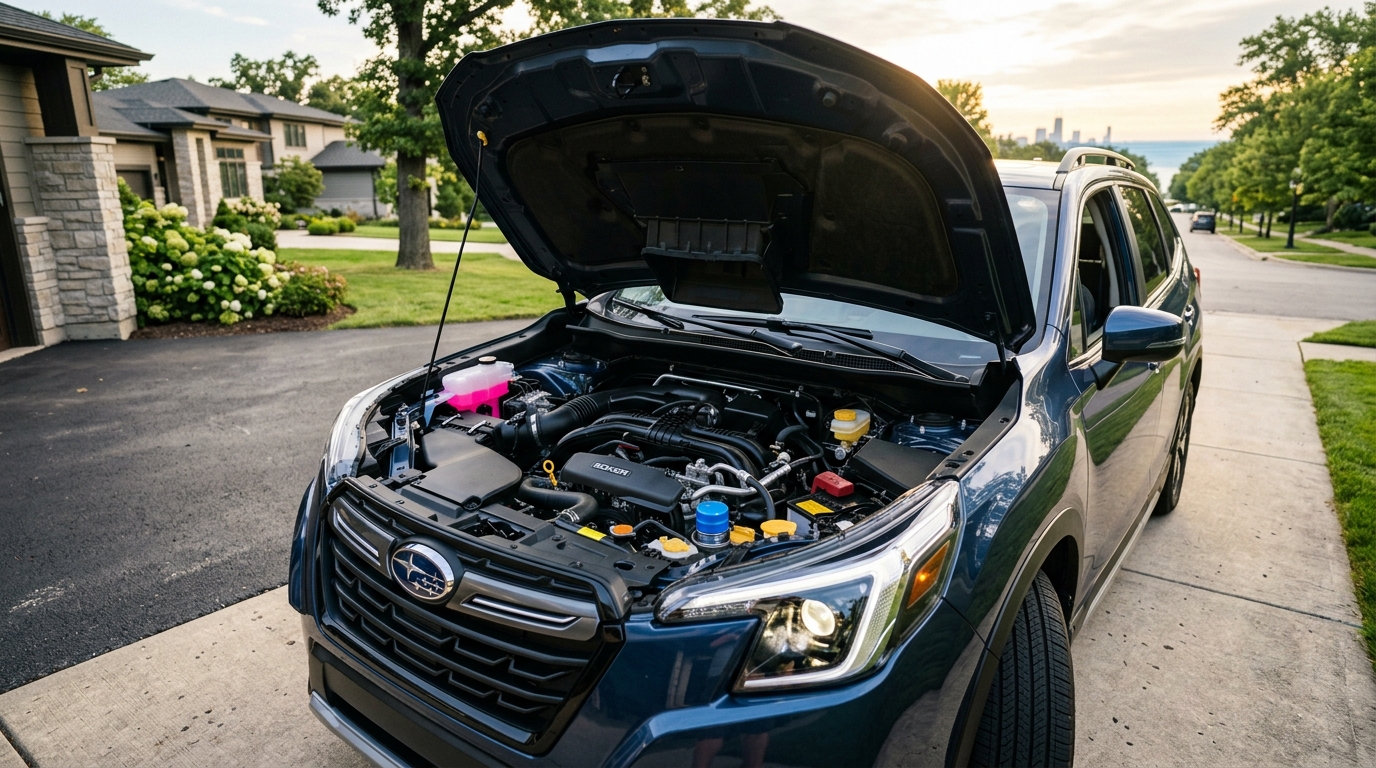
Preparing for a journey away from the city requires a focused look at the lifeblood of your vehicle. The unique Boxer engine configuration found in models like the 2026 Subaru Forester and 2026 Subaru Outback relies on specific fluid levels to maintain its signature low center of gravity and smooth operation. Before you head out, verify that your coolant is at the appropriate level and that the mixture is correct for the season. In our cold-winter climate, maintaining the right antifreeze concentration is vital to prevent internal engine damage when temperatures dip. We also recommend inspecting the windshield washer fluid; using a formula rated for at least -40°F ensures your visibility remains clear even if you encounter a sudden late-season frost or heavy road salt spray.
Beyond the cooling system, brake fluid integrity is a non-negotiable safety check. Brake fluid is hygroscopic, meaning it naturally absorbs moisture over time, which can lower its boiling point and lead to a "spongy" pedal feel during heavy braking. Our certified technicians often see how the humidity near the Lake Michigan waterfront can accelerate this process. If you are unsure about the age or condition of your fluids, you can reach our service team at (708) 943-9726 to discuss a professional flush and fill. Ensuring these systems are sealed and pressurized correctly prevents small leaks from becoming major roadside headaches.
If you prefer an in-person consultation before your departure, our service center is conveniently situated for a quick multi-point inspection. We check for "bulging" or micro-cracks in radiator hoses and verify that all drive belts are free from glazing or fraying. These rubber components are sensitive to the thermal stress of stop-and-go traffic on the Kennedy Expressway, and a proactive replacement is far simpler than a repair performed on the shoulder of a highway.
Table of Contents
- Mastering the Dipstick: Checking Oil Level and Condition on Modern Subaru Models
- Tire Safety and Symmetrical All-Wheel Drive Performance on the Highway
- Chicago Weather and Your Subaru Battery: Lifespan and Electrical System Health
- Understanding Highway Range, Cargo Capacity, and Load Management
- Pre-Trip Inspection FAQs: What Chicago Drivers Ask Before Hitting the Road
- Finalizing Your Road-Trip Readiness
Mastering the Dipstick: Checking Oil Level and Condition on Modern Subaru Models
How long has it been since you manually verified your oil level? While modern dashboards feature various warning lights, nothing replaces a physical inspection of the dipstick before a 500-mile trip. To get an accurate reading on a 2024 Subaru Forester or 2026 Subaru Outback, park on a level surface and allow the engine to cool for a few minutes so the oil can settle into the pan. Pull the yellow dipstick, wipe it completely clean with a lint-free rag, reinsert it fully, and pull it out once more. The oil should fall between the two holes or marks; if it is near the lower mark, a top-off is necessary to ensure proper lubrication of the Symmetrical All-Wheel Drive components and engine internals.
The color and consistency of the oil tell a story about your engine's health. Fresh oil should appear amber and translucent. If the oil on the dipstick is pitch black or feels gritty between your fingers, it has likely lost its ability to effectively suspend contaminants and should be changed immediately. For those who do their own maintenance, you can order genuine Subaru parts like high-quality synthetic oil and OEM filters directly through our website to ensure a perfect fit for your specific model year. Using the correct viscosity is essential, as high-temperature highway driving can cause thinner, degraded oil to lose its protective film.
If your inspection reveals that a full oil change is due, the most efficient path is to schedule your service online before you load up the cargo area. Our factory-trained team uses diagnostic tools calibrated specifically for the 2.5L H4 and 2.4L H4 engines to ensure every seal is tight and every sensor is functioning within factory tolerances. This professional oversight provides peace of mind that your vehicle is prepared for the sustained RPMs required for long-distance cruising.
Tire Safety and Symmetrical All-Wheel Drive Performance on the Highway
Maintaining uniform tire health is more critical for a Subaru than for almost any other vehicle on the road. Because the Symmetrical All-Wheel Drive system is designed to distribute power to all four wheels constantly, significant differences in tire circumference can put undue stress on the drivetrain. We recommend checking your tire pressure when the rubber is "cold"—meaning the vehicle has been parked for at least three hours. You can find the specific PSI requirements for your 2026 Subaru Forester on the placard inside the driver-side door jamb. Remember that for every 10-degree change in outside temperature, your tire pressure can fluctuate by about 1 to 2 PSI.
Tread depth is your primary defense against hydroplaning during heavy rain in Rogers Park or on the open highway. While the standard "penny test" is a helpful baseline, we look for more nuanced signs of wear, such as "dry rot" or small cracks in the sidewalls caused by UV exposure. If your tires are nearing the end of their lifespan, we offer various service specials that often include tire rotations or alignments. A proper alignment ensures that your tires wear evenly and that your vehicle tracks straight, reducing driver fatigue during long stints behind the wheel.
Don't forget to inspect the spare tire located under the cargo floor. It is one of the most frequently neglected items in a pre-trip checklist. Verify that the spare is inflated to its recommended pressure—which is often higher than the standard tires—and that your jack and lug wrench are present and functional. Having a road-ready spare is a vital safety net, especially when traveling through areas where cell service might be spotty and immediate assistance is unavailable.
Chicago Weather and Your Subaru Battery: Lifespan and Electrical System Health
It is a common misconception that vehicle batteries only fail during the depths of winter. In reality, the extreme heat of a Midwestern summer can be just as damaging, as high temperatures accelerate internal corrosion and cause battery fluid to evaporate. A typical battery in our region has a lifespan of about 3 to 5 years, but the constant temperature swings can push that toward the shorter end of the spectrum. Before leaving Irving Park for a long trip, look for white, ashy corrosion around the battery terminals. This buildup can act as an insulator, preventing your alternator from fully charging the battery while you drive.
A professional load test is the only way to truly gauge a battery's "cranking power." If your engine seems to turn over slowly or if your interior lights flicker when you start the car, your battery may be reaching the end of its reliable life. This is especially important for vehicles equipped with EyeSight® Driver Assist Technology, as the suite of safety sensors and cameras requires a stable electrical system to function at peak performance. If you are considering upgrading to a newer model with the latest safety tech, you can view our new vehicle specials to see the current lineup of highly rated SUVs.
For those staying with their current vehicle, we recommend carrying a portable booster pack or a set of high-quality jumper cables in your emergency kit. Ensuring your battery is secured tightly in its tray is also important; vibration is a leading cause of internal battery failure, and the rough pavement found on many local routes can loosen even the sturdiest brackets. A quick check of the mounting hardware can prevent a sudden electrical disconnect miles from home.
Understanding Highway Range, Cargo Capacity, and Load Management
Calculating your fuel stops and managing your vehicle's weight are essential steps for a smooth transit. A 2026 Subaru Outback equipped with the 2.5L H4 engine and an 18.0-gallon fuel tank achieves an estimated 31 mpg highway. Under ideal conditions, this provides a theoretical range of roughly 550 miles. However, this range can decrease significantly based on how you load the vehicle. Heavy items should be placed low and as far forward in the cargo area as possible to maintain stable handling. The Outback offers about 33 cubic feet of space behind the second row, while the 2026 Subaru Ascent provides more versatility for larger groups with its 7-passenger seating and higher payload capacity.
If you are using a roof rack or a cargo carrier, be mindful of the added aerodynamic drag. External carriers can reduce your fuel efficiency by several miles per gallon, which may require more frequent fuel stops than your initial calculations suggested. Furthermore, always respect the maximum roof load limit specified in your owner's manual. Overloading the roof can negatively impact the vehicle's center of gravity, making it more prone to swaying during sudden maneuvers or in high-wind conditions on the open plains.
For those towing a small trailer or camper, the 2026 Subaru Outback has a towing capacity of 2,700 lb, while the Ascent can handle significantly heavier loads. Before hitching up, verify that your trailer lights are synchronized with the vehicle's signals and that your safety chains are properly crossed. Checking your brake pad thickness is also vital when towing, as the added weight increases your stopping distance and puts more thermal strain on the braking system. A quick visual inspection of the pads through the wheel spokes can confirm if you have enough friction material remaining for the trip.
Pre-Trip Inspection FAQs: What Chicago Drivers Ask Before Hitting the Road
Q: How often should I have my Subaru EyeSight® cameras calibrated? EyeSight® cameras are precision-aligned at the factory and typically do not require periodic calibration. However, if you have recently had your windshield replaced or if your vehicle's ride height has been altered by a lift kit, a recalibration is necessary to ensure the safety systems function correctly. Our technicians use specialized targets and software to reset these systems to factory specifications.
Q: Is it necessary to change my oil specifically before a road trip if I still have 1,500 miles left on my interval? While you aren't strictly required to change it, doing so provides a fresh layer of protection for the sustained high-heat conditions of highway driving. It also allows a technician to perform a full multi-point inspection, catching potential issues like worn belts or low coolant levels that you might miss. If you decide to wait, at least verify that your oil level is topped off to the "full" mark on the dipstick.
Q: What is the recommended tire pressure for a Subaru when the car is fully loaded with luggage and passengers? You should generally stick to the PSI listed on your vehicle's door jamb placard, even when loaded. While some drivers believe over-inflating tires helps with heavy loads, it actually reduces the tire's contact patch and can lead to harsh ride quality and uneven wear. Always check the pressure when the tires are cold for the most accurate reading.
Q: Can I use regular tap water to top off my coolant reservoir in an emergency? In a dire emergency, plain water is better than an empty radiator, but it should be replaced with the proper 50/50 coolant mix as soon as possible. Tap water contains minerals that can create deposits inside your engine and radiator, and it lacks the anti-corrosion additives found in genuine Subaru coolant. If you've had to add water, we recommend a full cooling system flush upon your return.
Q: Should I worry about a small crack in my windshield before a long drive? Yes, because the vibrations and pressure changes of highway driving can cause a small chip to spread across the entire windshield rapidly. Furthermore, if the crack is in the upper center of the glass, it can interfere with the EyeSight® cameras' field of vision. It is much safer to have a small chip repaired in the city than to deal with a shattered windshield in the middle of a trip.
Finalizing Your Road-Trip Readiness
A successful journey begins long before you pull out of your driveway. By taking the time to inspect your fluids, verify your tire health, and test your battery, you are honoring the engineering that makes your Subaru a leader in longevity and safety. These simple proactive steps prevent the most common causes of roadside delays and ensure that your focus remains on the destination rather than the dashboard. Our team is committed to supporting your active lifestyle with the expert care your vehicle deserves.
If you have any lingering concerns about your vehicle's readiness, we invite you to visit Berman Subaru of Chicago for a comprehensive seasonal assessment. Whether you need a quick fluid top-off or a more detailed mechanical review, our staff is here to provide transparent, knowledgeable support. You can also reach us at (708) 943-9726 to speak with a service advisor about your specific pre-trip needs. Safe travels and enjoy the peace of mind that comes with a well-maintained Subaru.
© 2026 Berman Subaru of Chicago. All rights reserved.