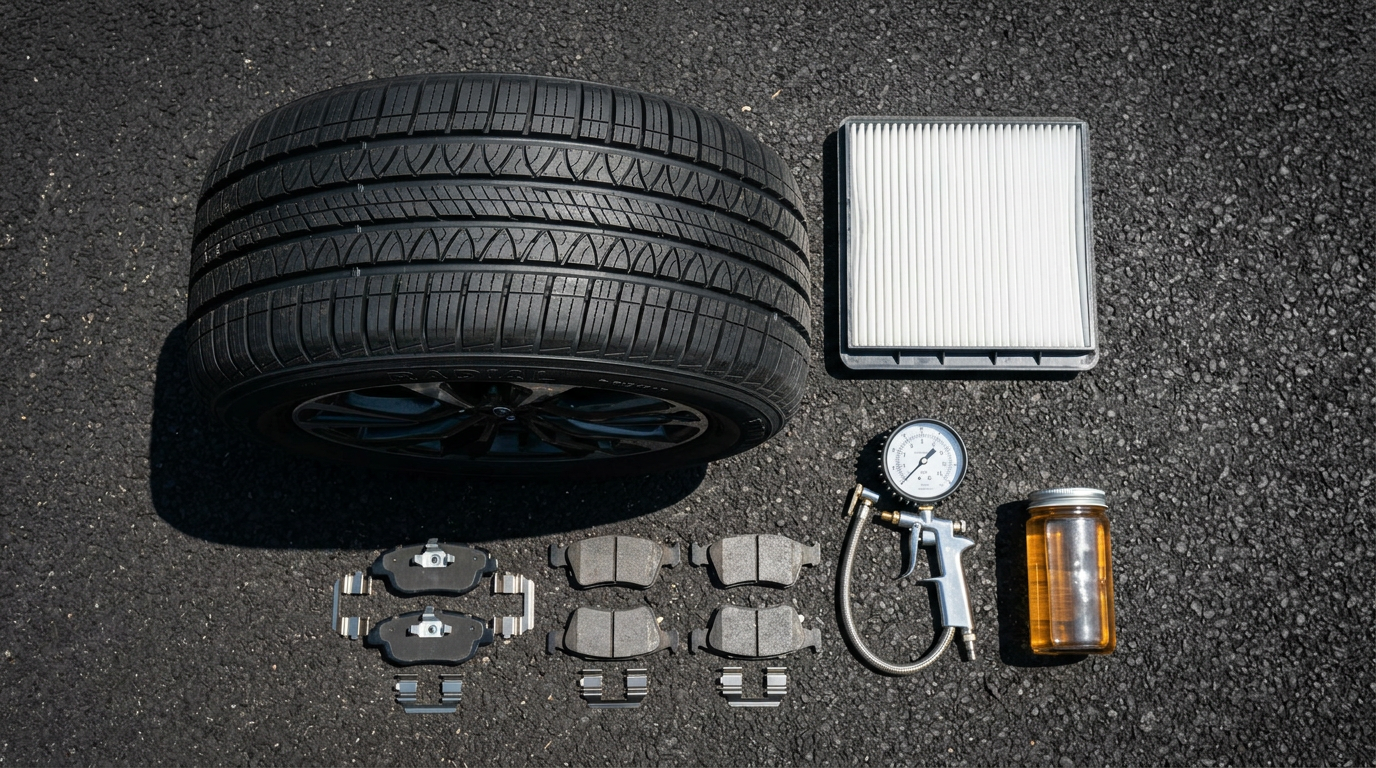
Preparing for a long-distance drive requires more than just packing your bags and programming your navigation system. For Subaru owners, proactive maintenance is the key to ensuring that legendary reliability and safety remain intact over hundreds of highway miles. Neglecting basic pre-trip inspections can turn an exciting getaway into an unexpected roadside delay, potentially compromising critical mechanical systems.
Our service team at Berman Subaru of Chicago knows that a thorough physical assessment of your vehicle is the most effective way to prevent mechanical failures. Before embarking on your next journey, dedicating time to inspect your tires, braking system, and climate control setup will protect your vehicle investment and keep your passengers secure. If you prefer to have factory-trained technicians handle these essential checks, you can easily find us by getting directions to our service center, or you can give our team a quick call to discuss any performance concerns before you depart.
A comprehensive pre-trip inspection focuses on the three pillars of road-trip readiness:
- Traction and Stability: Checking tire tread depth, physical condition, and cold inflation pressures to maintain proper grip.
- Stopping Power: Verifying brake pad thickness, rotor condition, and hydraulic fluid levels to ensure predictable stopping distances.
- Cabin Comfort: Testing the climate control system to confirm the cabin remains cool, dry, and free of airborne allergens.
Table of Contents
- Subaru Symmetrical AWD Tire Requirements and Pressure Specs
- The Penny Test and Towing Adjustments for Your Subaru Tires
- Maintaining Subaru Brake Performance and Fluid Replacement Intervals
- Diagnosing Subaru A/C Systems: Warm Air and Failing Compressors
- How to Spot a Refrigerant Leak in Your Subaru Climate Control
- Quick Answers to Common Subaru Maintenance and Service Questions
- Schedule Your Pre-Trip Multi-Point Inspection at Berman Subaru
Subaru Symmetrical AWD Tire Requirements and Pressure Specs
Did you know that driving a Subaru with mismatched tire pressures can place unnecessary stress on your drivetrain? Unlike front-wheel-drive vehicles, the Subaru Symmetrical All-Wheel Drive system relies on uniform wheel speeds at all four corners to distribute power correctly. When one tire is significantly underinflated or overinflated, its rolling circumference changes, forcing the center differential to work harder to compensate for the speed variance. Over time, this constant compensation can lead to premature drivetrain wear and reduced fuel efficiency.
To maintain optimal handling and mechanical longevity, you must adhere to the manufacturer's cold tire pressure specifications. For example, when inspecting a 2026 Subaru Forester, the standard factory recommendation is typically 30 psi for the front tires and 29 psi for the rear tires. If you are driving a 2026 Subaru Outback, the factory specification generally calls for 35 psi in the front and 33 psi in the rear. Always check the Tire and Loading Information Label located on your driver's side B-pillar to confirm the exact numbers for your specific trim level, as these figures are calculated when the tires are cold—meaning the vehicle has been parked for at least three hours.
If your dashboard displays the Tire Pressure Monitoring System (TPMS) warning light, it indicates that at least one tire has dropped below the safe inflation threshold. In most modern Subaru models, the TPMS will reset automatically once the tires are inflated to the correct specifications and the vehicle is driven at speeds above 15 mph for roughly 10 to 20 minutes. To keep your tires wearing evenly and protect your all-wheel-drive system, we recommend scheduling regular rotations every 6,000 to 7,500 miles. You can easily schedule a service appointment online with our certified technicians, and be sure to check our current maintenance incentives for seasonal tire care opportunities.
The Penny Test and Towing Adjustments for Your Subaru Tires
Are your tires actually ready to handle a sudden summer downpour on the highway? Adequate tread depth is the only barrier preventing your vehicle from hydroplaning when water pools on the pavement. While professional tread depth gauges provide the most accurate measurements, you can perform a quick, reliable assessment at home using a standard U.S. penny.
To perform the penny test, follow these steps:
- Hold a penny between your fingers so that Abraham Lincoln's head is pointing down and facing you.
- Insert the coin into one of the deepest grooves of your tire tread.
- Observe how much of Lincoln's head is covered by the rubber. If the top of his head is completely visible, your tread depth has worn below 2/32 of an inch.
- Repeat this test across multiple points of the tire, including the inner, center, and outer grooves, to check for uneven wear patterns.
Tires worn to 2/32 of an inch or less are legally bald and must be replaced immediately to maintain safe stopping distances. If you notice the tread is thin only on the inner or outer edges, this is a strong indicator of a wheel alignment issue or suspension wear, which should be corrected to prevent ruining a new set of tires.
Additionally, if you plan on utilizing the 2,700-pound towing capacity of a 2026 Subaru Outback or the 1,500-pound towing capacity of a 2026 Subaru Forester for a family camping trip, you must adjust your tire pressures accordingly. Towing a trailer transfers substantial tongue weight to the rear axle of your vehicle. To safely manage this additional load, the rear tires should be inflated to the maximum recommended pressure indicated on the tire sidewall or the vehicle placard. Operating underinflated tires while carrying heavy loads causes excessive sidewall flexing, which generates extreme heat and significantly increases the risk of a high-speed tire blowout.
Maintaining Subaru Brake Performance and Fluid Replacement Intervals
How does your brake pedal feel when you bring your vehicle to a stop? A soft, spongy, or unusually springy brake pedal is a primary indicator of moisture contamination or air bubbles trapped within the hydraulic brake lines. Brake fluid is highly hygroscopic, meaning it naturally absorbs moisture from the surrounding atmosphere over time. As moisture levels rise, the boiling point of the brake fluid drops significantly. Under heavy braking conditions—such as descending steep hills or navigating stop-and-go highway traffic—this moisture can vaporize, leading to a drastic loss of stopping power.
To prevent hydraulic fade and maintain the integrity of your braking system, Subaru recommends replacing the brake fluid every 30,000 miles or 30 months, whichever comes first under normal driving conditions. If you frequently drive in high-humidity environments or pull trailers, more frequent fluid exchanges may be necessary. Neglecting this service interval can allow corrosive moisture to damage expensive internal components, including the anti-lock braking system (ABS) actuator and the brake calipers.
When performing a pre-trip brake inspection, our factory-trained technicians look for several critical wear indicators:
- Brake Pad Thickness: Replacing pads before they wear below 2 mm prevents metal-on-metal contact.
- Rotor Surface Condition: Checking for deep scoring, heat spots, or rust scaling that can cause vibrations.
- Caliper Operation: Ensuring the calipers slide freely and apply even pressure to both sides of the rotor.
- System Leaks: Inspecting the master cylinder, brake lines, and flexible hoses for any signs of escaping fluid.
If your inspection reveals that your brake pads are thin or your rotors are warped, it is vital to use high-quality replacement parts designed specifically for your vehicle's weight and braking dynamics. You can easily order genuine Subaru parts directly through our department to ensure your vehicle's safety systems operate exactly as the factory intended.
Diagnosing Subaru A/C Systems: Warm Air and Failing Compressors
What causes a vehicle's climate control system to blow warm air immediately after the car has been parked in the direct sun? When a vehicle sits in intense sunlight, the cabin interior can reach temperatures well over 130 degrees Fahrenheit. This extreme thermal load temporarily overpowers the air conditioning system, requiring several minutes of driving with the windows cracked to purge the superheated air. However, if the system continues to blow warm air long after you have hit the highway, it indicates an underlying mechanical or electrical issue rather than a simple solar load.
A common culprit behind poor cooling performance is a failing radiator cooling fan. If the fan cannot pull sufficient air through the A/C condenser located at the front of the vehicle, the refrigerant cannot release its heat, resulting in warm air entering the cabin. Another possibility is a sticking expansion valve, which restricts the flow of refrigerant through the evaporator core.
If your climate control system is struggling, pay close attention to the A/C compressor, which acts as the heart of the refrigeration cycle. You can spot a failing compressor by watching for these common warning signs:
- Unusual Noises: Squealing, grinding, or loud clicking sounds when the climate control is switched on, indicating bearing wear.
- Clutch Non-Engagement: The compressor clutch fails to click and spin when the A/C button is pressed, which can be caused by electrical failure or internal mechanical binding.
- Visible Oil Leaks: Oily residue accumulation around the compressor shaft seal or body seams, showing that both lubricant and refrigerant are escaping.
How to Spot a Refrigerant Leak in Your Subaru Climate Control
If your vehicle's cabin cooling performance has gradually declined over several weeks, you are likely dealing with a slow refrigerant leak. Because modern automotive A/C systems operate under high pressures, even a microscopic pinhole in a hose or a slightly loose fitting can allow refrigerant to escape into the atmosphere. Operating an A/C system with low refrigerant not only prevents the cabin from cooling but can also starve the compressor of the lubricating oil that circulates alongside the refrigerant, leading to catastrophic compressor failure.
Finding a refrigerant leak requires a systematic approach, as refrigerant gas is colorless and odorless. Technicians typically begin with a visual inspection of all A/C lines, the condenser, and the compressor connections, looking for dark, oily stains. Because compressor oil escapes along with the refrigerant, these dirt-attracting oil spots are a reliable indicator of a leak.
For harder-to-find leaks, professional diagnostic tools are required. Technicians often inject a specialized ultraviolet (UV) dye into the system and charge it with a small amount of refrigerant. After running the system, they use a UV light and yellow goggles to trace the glowing dye directly to the source of the leak, whether it is a stone-damaged condenser or a leaking evaporator core hidden deep behind the dashboard. Once the leak is identified and repaired, the system must be evacuated using a vacuum pump to remove all moisture and air before being recharged with the precise weight of refrigerant specified by the manufacturer.
Quick Answers to Common Subaru Maintenance and Service Questions
Q: What causes the A/C to blow warm air only when the vehicle is idling?
A: This issue is typically caused by a failing radiator cooling fan or a heavily restricted A/C condenser. When the vehicle is moving, airflow passes through the condenser naturally to cool the refrigerant, but at an idle, the system relies entirely on the electric fan to pull air through. If the fan fails, the refrigerant temperature spikes, and the system stops cooling.
Q: How can I tell if my cabin air filter needs to be replaced before a trip?
A: If you notice a musty, moldy odor when you turn on the fan, or if you experience reduced airflow through the vents, your cabin air filter is likely clogged with dust, pollen, and debris. Replacing this filter every 12,000 miles ensures clean air for your passengers and reduces strain on your blower motor.
Q: Can I replace just one tire on my Subaru if it gets damaged?
A: Because of the tight tolerances of the Symmetrical AWD system, all four tires must have a tread depth within 2/32 of an inch of one another. If a single tire is damaged and the remaining three are significantly worn, you must replace all four tires, or have the single new tire shaved down to match the tread depth of the others to prevent drivetrain damage.
Q: Why does my tire pressure warning light come on only on cool mornings?
A: Tire pressure drops by approximately 1 psi for every 10-degree drop in ambient temperature. On cold mornings, a marginally low tire can dip below the TPMS warning threshold, but as you drive and the tires heat up from road friction, the pressure rises enough to turn the light off.
Q: What are our options for saving on seasonal Subaru maintenance?
A: Keeping your vehicle in peak condition does not have to break your budget. We offer rotating service offers that cover everything from wheel alignments and tire rotations to brake inspections and climate control diagnostics, helping you prepare for your travels affordably.
Schedule Your Pre-Trip Multi-Point Inspection at Berman Subaru
Taking the time to perform these essential checks before you travel ensures that your journey is defined by adventure rather than mechanical setbacks. From verifying the precise tread depth on your tires to ensuring your braking system can handle the demands of highway driving, proactive maintenance is the ultimate key to peace of mind. Our factory-trained technicians possess the specialized diagnostic tools and expertise required to keep your vehicle performing at its absolute best.
For drivers navigating the bustling expressways around Chicago or commuting daily through Irving Park, having a reliable vehicle is an absolute necessity. If you are preparing for an upcoming road trip or simply want to ensure your climate control system can handle a hot afternoon ride near Rogers Park, our team is standing by to help. You can easily find our service center by getting directions to our location at 4330 W Irving Park Rd, or you can call us at (708) 943-9726 to speak with a service advisor. Let us help you prepare your vehicle so you can focus on the road ahead.
© 2026 Berman Subaru of Chicago. All rights reserved.