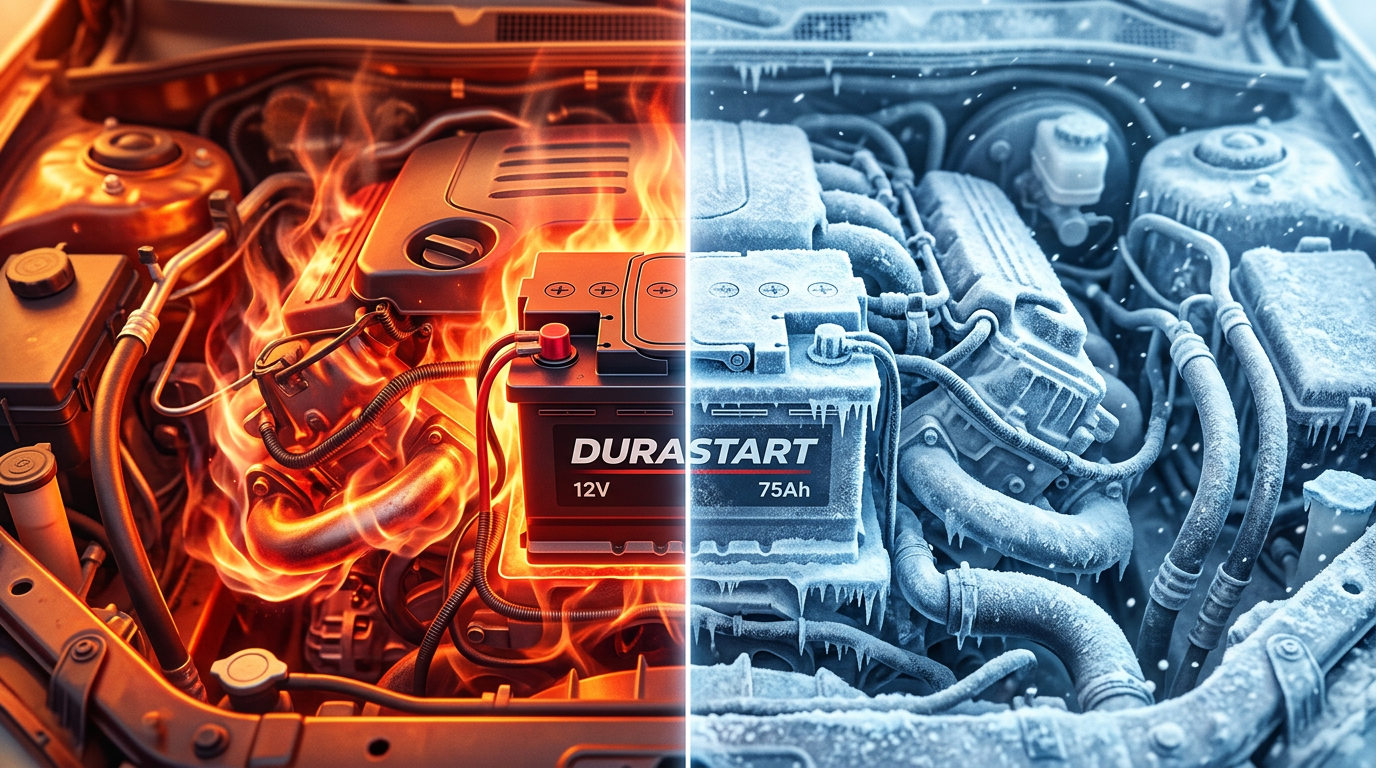
While most drivers brace themselves for sub-zero mornings, the real threat to your vehicle's starting power actually peaks during the summer months. Many motorists associate a dead battery with freezing temperatures because cold weather thickens engine oil and increases the physical effort required to turn the engine over. However, winter merely exposes the structural damage that has already occurred during the previous summer. Extreme heat is the primary catalyst for internal battery degradation, slowly destroying the components required to hold a charge.
According to research from industry experts, heat is the number one culprit of car battery failure. This thermal stress significantly shortens the lifespan of your starting system depending on the climate. Batteries operating in the warmest regions of the country typically require replacement after about 3.5 years, whereas those in colder climates often last closer to 5 years. In Chicago, July brings average daily highs near 83°F, but intense summer heat waves regularly push temperatures past 90°F, creating extreme conditions under the hood that accelerate internal wear.
Sustained high temperatures place an immense burden on your vehicle's electrical system, particularly during long highway drives or extended idling in heavy traffic. If you suspect your battery is losing its charge, you can easily find our service center location or give our service coordinators a quick call to discuss your vehicle's starting performance.
Table of Contents
- The Science of Destruction: How Underhood Heat Damages a Subaru 12-Volt Battery
- Comparing Standard Flooded vs AGM Batteries for Commuters
- Warning Signs of a Heat-Damaged Battery and How Many Hot Summers It Can Survive
- The Value of Dealership Care vs Independent Shops for Subaru Battery Replacement
- Common Questions About Summer Battery Care
- Proactive Summer Maintenance and Battery Testing at Berman Subaru
The Science of Destruction: How Underhood Heat Damages a Subaru 12-Volt Battery
Underneath the hood of your vehicle, summer temperatures create a highly destructive environment for a standard lead-acid battery. While the outside air temperature might read 90°F, the temperature inside the engine bay can easily climb to double that figure during prolonged operation. This extreme heat triggers a series of chemical reactions that permanently alter the battery's internal chemistry and physical structure.
First, the liquid electrolyte solution inside the battery—which is a mixture of water and sulfuric acid—begins to evaporate. As water escapes through the battery's vents, the overall fluid level drops, directly exposing the internal lead plates to the air. This exposure permanently reduces the battery's active surface area, lowering its overall charge capacity and increasing internal electrical resistance.
Second, the loss of water increases the concentration of the remaining sulfuric acid. This highly concentrated acid becomes extremely corrosive, accelerating the degradation of the internal lead plates and the delicate separators between them. This chemical corrosion causes the plates to shed active material, which accumulates at the bottom of the casing and can eventually cause an internal short circuit.
A healthy 12-volt car battery should measure between 12.6 and 12.8 volts at rest with the engine off. When heat-induced evaporation and plate corrosion take hold, the battery struggles to maintain this voltage, resulting in a rapid loss of cranking power. To help local drivers stay ahead of these issues, we offer seasonal maintenance opportunities through our rotating service specials.
Comparing Standard Flooded vs AGM Batteries for Commuters
Choosing the right battery technology can make a significant difference in how your vehicle handles seasonal temperature spikes. Traditional standard flooded lead-acid batteries have been the automotive norm for decades, relying on free-flowing liquid electrolyte to submerge the internal plates. While cost-effective, these batteries are highly susceptible to electrolyte evaporation and plate damage when subjected to high engine bay temperatures.
In contrast, Absorbent Glass Mat (AGM) batteries utilize a completely sealed design where the electrolyte is absorbed into ultra-fine fiberglass separators. This construction provides several distinct advantages for modern vehicles:
- Superior Heat Resistance: The sealed, pressurized design of AGM batteries prevents electrolyte evaporation, protecting the internal plates from exposure and corrosion.
- Vibration Resistance: The tightly packed internal components of an AGM battery absorb road vibrations far better than standard flooded designs, preventing physical plate degradation.
- Faster Recharging and Deep Cycling: AGM batteries can handle repeated charging and discharging cycles without losing capacity, making them ideal for vehicles with heavy electrical demands.
Modern vehicles equipped with advanced fuel-saving start-stop systems place continuous electrical loads on the battery even when the engine is temporarily shut off. If your vehicle came factory-equipped with an AGM battery, it must always be replaced with another AGM battery to prevent rapid failure and maintain proper electrical system performance. If you are considering upgrading your vehicle to a model that features advanced start-stop systems and heavy-duty charging capabilities, you can view our current new vehicle specials to explore our latest lineup.
Warning Signs of a Heat-Damaged Battery and How Many Hot Summers It Can Survive
Before a battery fails completely, it almost always exhibits subtle warning signs that alert you to its declining health. Paying close attention to how your vehicle starts and operates during the warmest months can prevent the frustration of a sudden breakdown. Common symptoms of a heat-damaged battery include:
- A noticeably slow engine crank when pressing the start button or turning the key.
- Headlights or interior cabin lights that appear dim when the engine is idling.
- Power windows, screens, and advanced safety features acting sluggish or taking longer than usual to boot up.
- Visual swelling, bloating, or deformation of the plastic battery casing caused by extreme internal heat.
- Heavy accumulation of white, powdery, or bluish corrosion around the battery terminals, which restricts electrical current.
A battery that has survived three or more hot summers is highly susceptible to sudden failure, as the cumulative effects of thermal stress gradually wear down the internal plates. Our service technicians often note that drivers coming in for routine maintenance are surprised to learn their battery has already survived three hot summers, which is the typical threshold where heat-induced wear begins to manifest as slow starting. For commuters parking near the Irving Park Metra Station, a slow engine crank at the end of a long summer day is a clear signal that the battery's reserve capacity is dangerously low.
If you do find yourself stranded with a dead battery, remember that owners have exclusive access to manufacturer-backed support through Subaru Roadside Assistance: 1-800-261-2155, which provides towing to the nearest authorized service center.
The Value of Dealership Care vs Independent Shops for Subaru Battery Replacement
While independent repair shops may seem like a convenient option for a quick fix, servicing your vehicle at a factory-authorized dealership ensures unmatched precision and protection. Modern vehicles are highly sophisticated electrical systems, and a simple battery replacement requires specialized knowledge to prevent damage to sensitive onboard computers, advanced driver-assist systems, and complex charging algorithms.
Our factory-trained technicians understand the exact electrical specifications of your specific model. When we replace a battery, we do not just swap the physical unit; we perform a comprehensive diagnostic check of the entire starting and charging system. This includes testing the alternator's output, checking for parasitic electrical draws, and performing a battery registration process if required by your vehicle's engine management system. This calibration ensures the alternator charges the new battery at the correct rate, preventing premature wear.
Furthermore, we only utilize original equipment manufacturer parts that carry a comprehensive national warranty. Our parts department makes it simple to order genuine parts designed specifically for your vehicle, and you can quickly schedule your service online to have our certified technicians perform the installation.
Common Questions About Summer Battery Care
Q: Does extreme heat damage a car battery faster than winter cold?
Yes. While winter cold temporarily reduces a battery's starting capacity by slowing down chemical reactions, extreme summer heat causes permanent structural damage and chemical degradation to the internal components.
Q: What should a healthy battery measure on a multimeter?
A healthy, fully charged 12-volt battery should read between 12.6 and 12.8 volts when tested at rest with the engine turned off. Anything below this range indicates a diminished state of charge or a weakening battery.
Q: Why is pre-trip battery testing especially important during the summer months?
Long road trips place massive demand on your vehicle's electrical system due to sustained air conditioning use, device charging, and navigation systems. Testing the battery before you leave helps identify hidden weaknesses that could cause a breakdown far from home.
Q: Can I upgrade my vehicle from a standard flooded battery to an AGM battery?
Yes, upgrading to an Absorbent Glass Mat battery is an excellent option if you frequently take short trips, idle in heavy traffic, or run multiple electronic accessories, as AGM technology handles deep cycling and high temperatures much better.
Q: How often should I have my battery tested to avoid getting stranded?
Industry experts recommend having your vehicle's battery and charging system tested at least once a year, particularly before the peak summer heat waves or once the battery reaches three years of age.
Proactive Summer Maintenance and Battery Testing at Berman Subaru
Do not wait for a clicking starter motor to tell you that your battery has reached its limit. Being proactive with your vehicle's maintenance is the most effective way to ensure uninterrupted reliability throughout the warmest months of the year. Our service department is fully equipped with advanced diagnostic tools that can quickly measure your battery's cold cranking amps, voltage levels, and overall reserve capacity, giving you an accurate picture of its health before a failure occurs.
Our dedicated team of professionals is committed to keeping your vehicle operating at peak performance. When you are ready to secure your vehicle's reliability for the hot months ahead, get step-by-step directions to our facility or reach out to us at (708) 943-9726 to book a comprehensive starting and charging system diagnostic. Let us help you keep your journeys safe, comfortable, and completely worry-free.